
Here's a call we get every winter, usually on the first real cold snap after Thanksgiving. A homeowner in Peachtree City looks out the kitchen window at 7 a.m. and sees the heat pump wearing a white coat of frost. A few minutes later, it's steaming like a kettle and the fan has stopped. She calls and asks the obvious question: "Is it broken?"
Most of the time, the answer is no. That steam is the heat pump doing exactly what it was designed to do. But on another call, a few days later in Newnan, the outdoor unit is a solid block of ice from top to bottom, the house is 61 degrees, and the electric bill is about to look very different. Same machine, same weather, very different situations.
The trick is knowing which one you're looking at. This guide explains why heat pumps frost up at all, how the defrost cycle works, what's normal and what isn't, what causes a heat pump to freeze solid in a Georgia winter, what you can safely do yourself, and when it's time to call a technician. If your heat pump is running but the house isn't warming, our FAQ answer on why a furnace or heat pump isn't heating is the short version, and our guide on why your furnace or heat pump is not heating is the long one. This guide is about the ice.
| What you see | Normal or a problem? | What to do |
|---|---|---|
| Light white frost on the outdoor coil on a cold, damp morning | Normal | Nothing. It should clear on its own in a defrost cycle |
| Steam rising from the unit, fan stopped for a few minutes | Normal (defrost cycle) | Nothing. Heat should resume within about 10 minutes |
| A whooshing sound when the unit stops and starts | Normal (reversing valve shifting) | Nothing |
| Frost that never clears after an hour or more of running | Problem | Switch to emergency heat and call us |
| Thick ice on the coil, top, or fan blade | Problem | Switch to emergency heat, don't chip it, call us |
| Ice built up from the bottom of the unit upward | Usually drainage or a stuck defrost | Check for gutter drips and blocked drainage, then call |
| Water dripping onto the unit from the roof or gutter | Problem waiting to happen | Fix the gutter or redirect the water |
| Ice after freezing rain or an ice storm | Weather, usually | Let the heat pump defrost, call if it doesn't clear |
| Heat pump frozen and aux or emergency heat running all the time | Problem | Call us. Your bill is climbing |
How does a heat pump heat your house in the winter?
A heat pump doesn't make heat the way a furnace does. It moves heat. In winter, it pulls heat out of the cold outdoor air and carries it inside. That sounds impossible on a 30-degree morning in Tyrone, but there's still a lot of heat in 30-degree air. It's just spread thin.
The heat pump is really an air conditioner that can run backwards. In summer, refrigerant picks up heat inside your house and dumps it outside. In winter, a part called the reversing valve flips the direction of the refrigerant, so the outdoor coil becomes the cold coil that picks up heat, and the indoor coil becomes the warm coil that gives it off.
Here's what one lap looks like in heating mode:
- Outside, the refrigerant gets colder than the air. Cold, low-pressure refrigerant flows into the outdoor coil. To pick up heat from 35-degree air, it has to be colder than 35 degrees, often well below freezing. The outdoor fan pulls air across the coil, and the refrigerant soaks up heat from that air and boils into a vapor.
- The compressor squeezes it. The compressor in the outdoor unit squeezes that vapor into a hot, high-pressure gas.
- Inside, it gives the heat away. The hot gas travels through the reversing valve and into the indoor coil, which sits on your air handler. Your blower pushes house air across that coil, the air warms up, and the refrigerant cools and turns back into a liquid.
- The pressure drops and it goes back outside. The liquid passes through a metering device, the pressure and temperature drop, and the cold refrigerant goes back to the outdoor coil to pick up more heat.
That first step is the whole reason heat pumps frost up. The outdoor coil has to run colder than the outdoor air. On a cold day, that means the coil is below 32 degrees. And Georgia winter air is often damp. When damp air touches a coil that's below freezing, the moisture in the air freezes onto the fins as frost, the same way frost forms on your windshield overnight.
Is it normal for a heat pump to frost up in the winter?
Yes. Some frost is not just normal, it's expected. Every heat pump in Fayette and Coweta County collects frost on cold, damp days. That's why every heat pump comes with a way to get rid of it.
The question isn't whether there's frost. It's how much, where, and whether it goes away.
Normal frost looks like this:
- A thin, even, white or light gray layer across the coil, often looking like a fuzzy coating on the fins
- It shows up on cold mornings, especially when it's in the 30s and humid, or foggy, or drizzly
- It clears off every so often, after which the coil is wet and you may see steam
- The house stays warm
A problem looks like this:
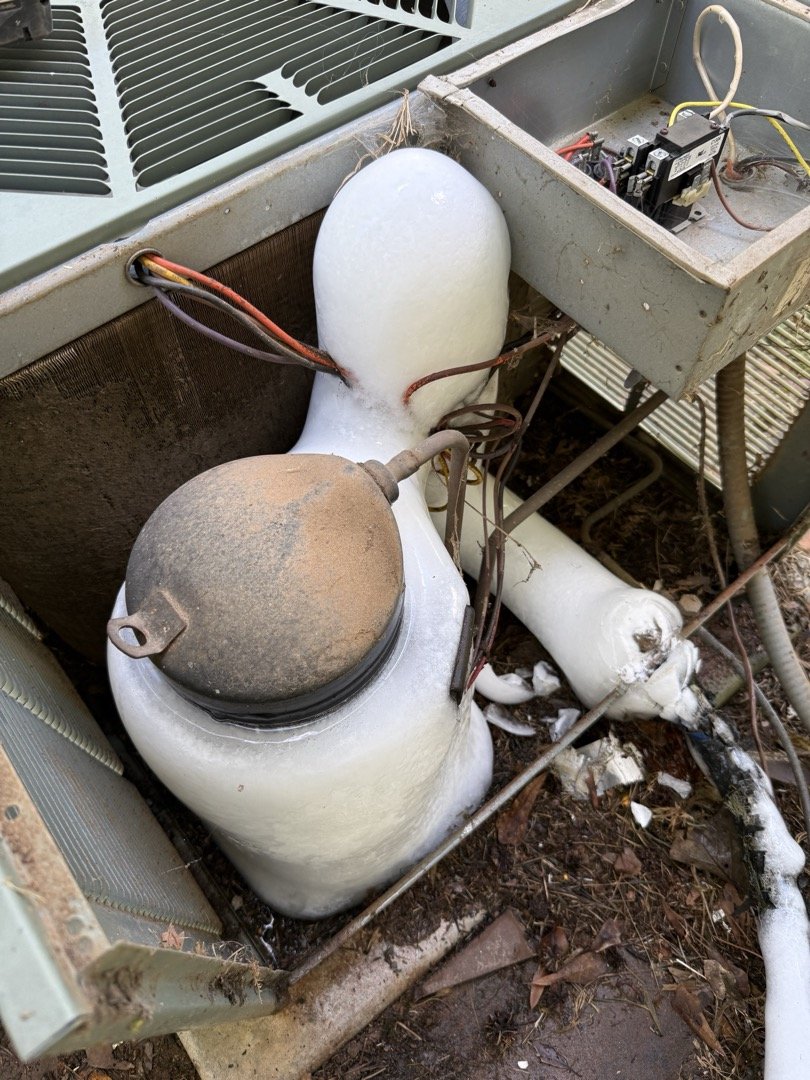
- Thick, clear or white ice, not frost, built up on the coil so you can't see the fins
- Ice on the top of the unit, on the fan blade, or on the fan guard
- The bottom of the coil encased in a solid band of ice that grows over days
- Frost that never clears, no matter how long the heat pump runs
- The house slowly losing temperature, or the auxiliary heat light on the thermostat staying on
Frost is a thin blanket. Ice is a wall. A blanket is fine. A wall blocks the air the heat pump needs to pull heat out of, and that's when things go downhill.
How does a heat pump defrost cycle work?
When frost builds up on the outdoor coil, the heat pump briefly switches into air conditioning mode to warm the coil from the inside and melt the frost. It's a clever trick, and it's the source of most of the odd noises and steam people notice in winter.
Here's what happens in a typical defrost cycle:
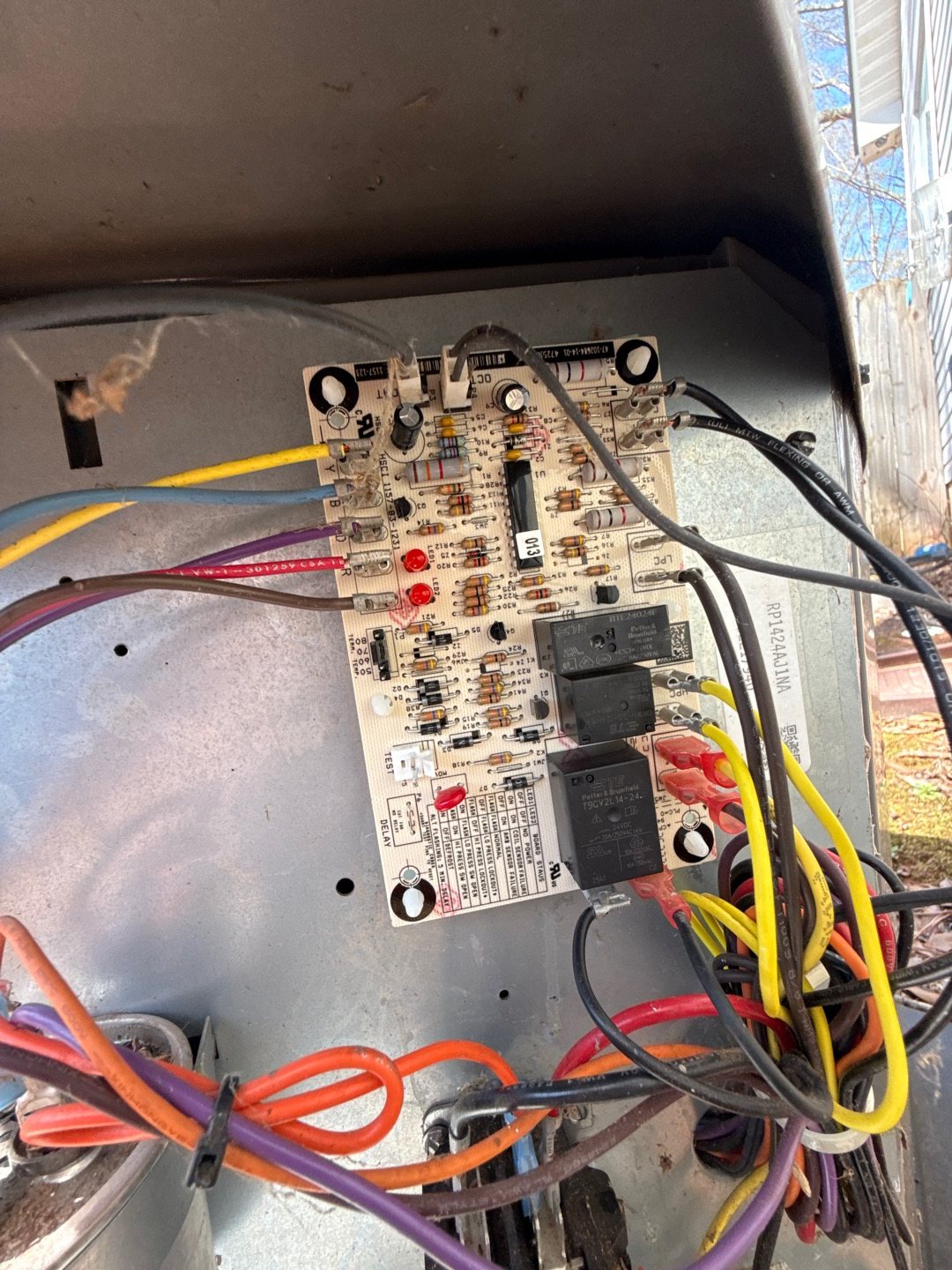
- The heat pump decides it's time. A control board in the outdoor unit, called the defrost board or defrost control, watches the coil. On many systems, a temperature sensor clipped to the outdoor coil tells the board when the coil is cold enough for frost to form. The board then either waits a set amount of run time (often 30, 60, or 90 minutes) or uses sensors to decide when frost has actually built up.
- The reversing valve flips. The board tells the reversing valve to switch the system into cooling mode. You'll often hear a loud whoosh as the refrigerant changes direction. Now the hot gas from the compressor goes to the outdoor coil instead of the indoor one.
- The outdoor fan stops. The board shuts off the outdoor fan so the heat stays in the coil instead of being blown away. That's why the fan goes still during defrost.
- The frost melts. Hot refrigerant warms the coil from the inside, the frost melts, and water runs off the bottom of the unit. On a cold day, that warm, wet coil sends up a cloud of steam. People sometimes think the unit is on fire. It's just water vapor.
- The backup heat kicks in. Since the system is in cooling mode for a few minutes, the indoor coil is now cold. To keep from blowing cold air into your house, most systems turn on the electric heat strips in the air handler during defrost.
- It switches back. When the coil sensor says the coil is warm enough, or a time limit is reached (often around 10 minutes), the board flips the reversing valve back to heating, turns the outdoor fan back on, and shuts off the backup heat.
The whole thing can happen several times an hour on a raw, wet morning, or not at all on a dry, sunny afternoon. It's normal for the steam, the whoosh, and the stopped fan to come and go. The sign of a healthy defrost system is simple: after each cycle, the coil is clear.
What causes a heat pump to freeze up?
When a heat pump goes from frosty to frozen, it's almost always because frost is forming faster than defrost can clear it, or because defrost isn't happening at all. Nearly every case we see falls into one of these categories.
1. A failed defrost board. If the board stops calling for defrost, frost keeps building with nothing to melt it. Boards fail from age, power surges, moisture, insects nesting on them, and corrosion on the connections. Sometimes a single relay on the board sticks.
2. A bad defrost sensor or thermostat. The small sensor clipped to the outdoor coil tells the board how cold the coil is. If it fails, comes loose from the tubing, or reads wrong, the board may think the coil is warm when it's encased in ice. Defrost never starts, or it ends too early, before the coil is clear.
3. A stuck reversing valve or a failed valve coil. The reversing valve is what lets the heat pump switch into defrost. It has an electric solenoid coil that moves a small pilot valve, which uses refrigerant pressure to shift the main valve. If the solenoid burns out, or the valve sticks partway, the heat pump can't switch into defrost properly. Sometimes it gets stuck in between, and the heat pump neither heats well nor defrosts well.
4. Low refrigerant. A system that's low on refrigerant runs at a lower pressure in the outdoor coil, which makes the coil colder than it should be. A colder coil collects frost faster, and the heat pump may not have enough heat to defrost it fully. Low refrigerant also means there's a leak somewhere, because refrigerant isn't used up.
5. An outdoor fan motor problem. If the outdoor fan isn't spinning, or spins slowly because of a weak motor or capacitor, not enough air crosses the coil. The coil gets colder, frost builds faster, and ice follows. The same thing happens if the fan blade is bent or ice has jammed it.
6. Airflow problems indoors. A clogged air filter, closed vents, or a dirty indoor coil or blower reduces the air moving across the indoor coil. In heating mode, that pushes pressures up, cuts the heat pump's capacity, and throws off the whole system's balance, which can make defrost less effective.
7. Water dripping onto the unit. A leaking or overflowing gutter, a missing downspout, or a roof edge right above the heat pump can drip water onto the top of the unit. In freezing weather, that water turns to ice on the fan, top, and coil faster than any defrost cycle can handle.
8. Poor drainage or a unit sitting too low. When the heat pump defrosts, the meltwater has to run off and drain away. If the unit sits on the ground, in a low spot, or in a pile of leaves or pine straw, that water can pool around the base and refreeze. Each cycle adds another layer, and ice builds up from the bottom.
9. Freezing rain and ice storms. Sometimes the cause is simply the weather. When freezing rain coats everything in a glaze of ice, it coats your heat pump too, and no defrost cycle can keep up with ice falling from the sky.
Why does the defrost board, sensor, or reversing valve fail?
These three parts work as a team, and when any one fails, the heat pump loses its ability to clear its own coil. They're also the parts we replace most often on frozen heat pumps.
The defrost board is a circuit board, and like any electronics living outdoors, it takes a beating. It sits in a metal box that heats up in summer and gets cold and damp in winter. Over years, solder joints crack, relays wear out, and connections corrode. Ants and other insects love the warmth of an electrical panel and can short out a board. A nearby lightning strike or a power surge can damage it in an instant. When a board fails, sometimes the heat pump stops defrosting entirely. Other times, it gets stuck in defrost, blowing cool air and running up the backup heat.
The defrost sensor is a small part, often a thermistor or a snap-disc switch clipped to a tube on the outdoor coil. It needs to be in tight contact with the tubing to read the coil temperature accurately. If the clip loosens, the sensor reads air temperature instead of coil temperature. If it fails, it can tell the board the coil is always warm. Either way, defrost doesn't happen when it should.
The reversing valve is a brass valve that switches the direction of the refrigerant. A solenoid coil on the outside shifts it with a magnetic pull. If the solenoid burns out, the valve can't move. If debris or wear makes the valve stick, it may not shift completely. A valve that's partly shifted can leak hot gas into the suction side, which makes the heat pump weak in both heating and defrost.
Testing these parts takes a technician. We check whether the board is sending voltage to the reversing valve and the fan relay, whether the sensor reads correctly at a known temperature, and whether the valve actually shifts when it's told to, by measuring line temperatures and pressures. Many boards also have test pins that let a technician force a defrost cycle and watch it happen.
How does low refrigerant make a heat pump freeze?
Low refrigerant makes the outdoor coil run colder than it should, and a colder coil frosts up faster. At the same time, it weakens the heat pump's ability to make heat, which weakens defrost.
In plain terms, refrigerant pressure and temperature are tied together. Less refrigerant in the outdoor coil means lower pressure, and lower pressure means the refrigerant boils at a lower temperature. On a 40-degree day, a properly charged heat pump might run its outdoor coil in the 20s. A heat pump that's low on charge might run it much colder. That extra cold pulls more moisture out of the air as frost, and it makes the frost harder to melt.
Low refrigerant shows up in other ways too. The heat pump runs longer, the air from the vents doesn't feel as warm, the auxiliary heat comes on more often, and in summer, the same system cools poorly. Our guide on why an AC is running but not cooling covers the summer side of the same problem.
Since a heat pump is a sealed system, low refrigerant means a leak. Heat pumps tend to leak more than straight air conditioners, because they run year-round and their refrigerant circuit goes through more temperature swings and more shifts of the reversing valve. We find leaks at the outdoor coil, at brazed joints, at service valves, and at spots where tubing rubs against the cabinet. Finding and fixing the leak is the real repair. Adding refrigerant without finding the leak just sets up the next freeze. Refrigerant work also requires an EPA-certified technician under Section 608 of the Clean Air Act.
How do airflow, filters, and the outdoor fan affect a frozen heat pump?
A heat pump depends on air moving across both coils. If either side is starved of air, the system gets out of balance, and in winter, that often ends with ice outside.
Outdoor airflow. The outdoor fan is what pulls outdoor air across the outdoor coil. If the fan motor fails, the fan doesn't spin, the coil gets very cold very fast, and frost builds into ice. A weak capacitor can make the fan spin slower than it should, which is harder to spot. A bent blade, a worn bearing, or a fan blade hitting ice can all cut the airflow too.
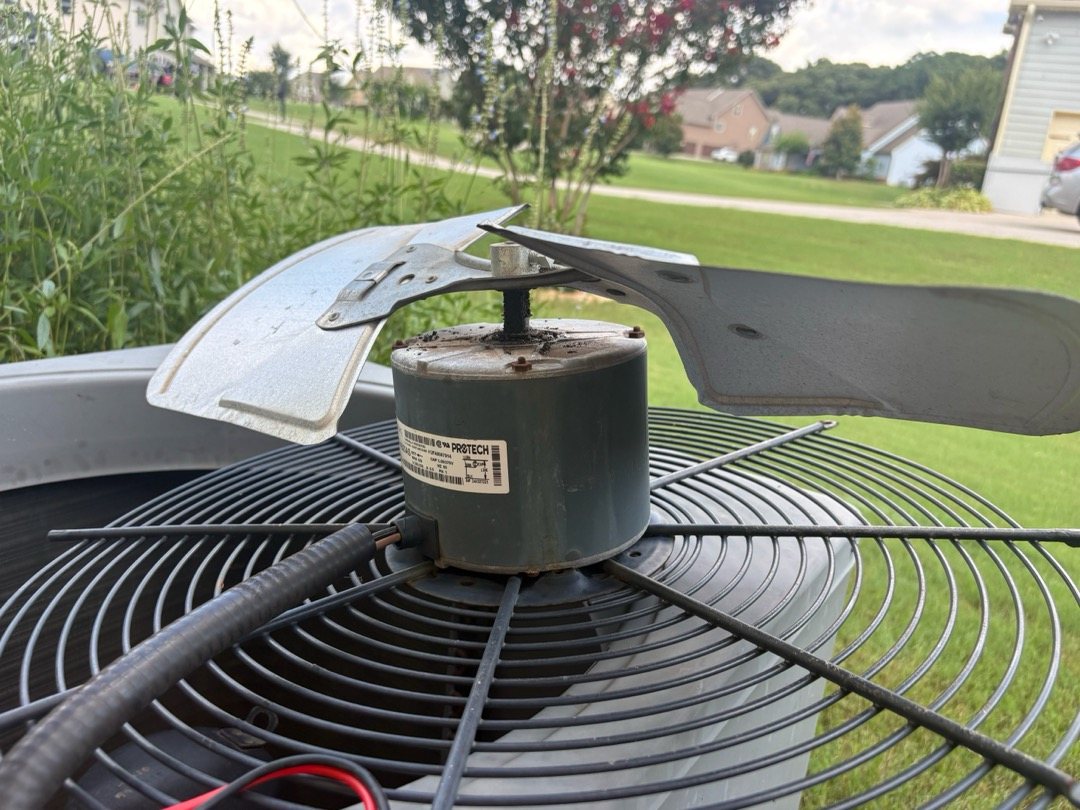
Here's an odd detail: on a lot of heat pumps, the defrost board is also what turns the outdoor fan off and on during defrost. So a fan that never runs may be a fan problem, a capacitor problem, or a board problem. A technician tests all three.
Shrubs, fences, and leaves also matter. A heat pump needs open space around it to breathe. If it's boxed in by bushes, a privacy screen, or leaves and pine straw piled up the sides, it can pull in less air, and it can recirculate its own cold discharge air.
Indoor airflow. A clogged filter, closed vents, or a dirty indoor coil or blower wheel cuts the air across the indoor coil. In heating mode, that makes the system run at higher pressures and lower capacity. The heat pump has to work harder for the same heat, and with less heat available, defrost cycles get less effective. Our guide on how often to change your air filter covers which filter fits your system.
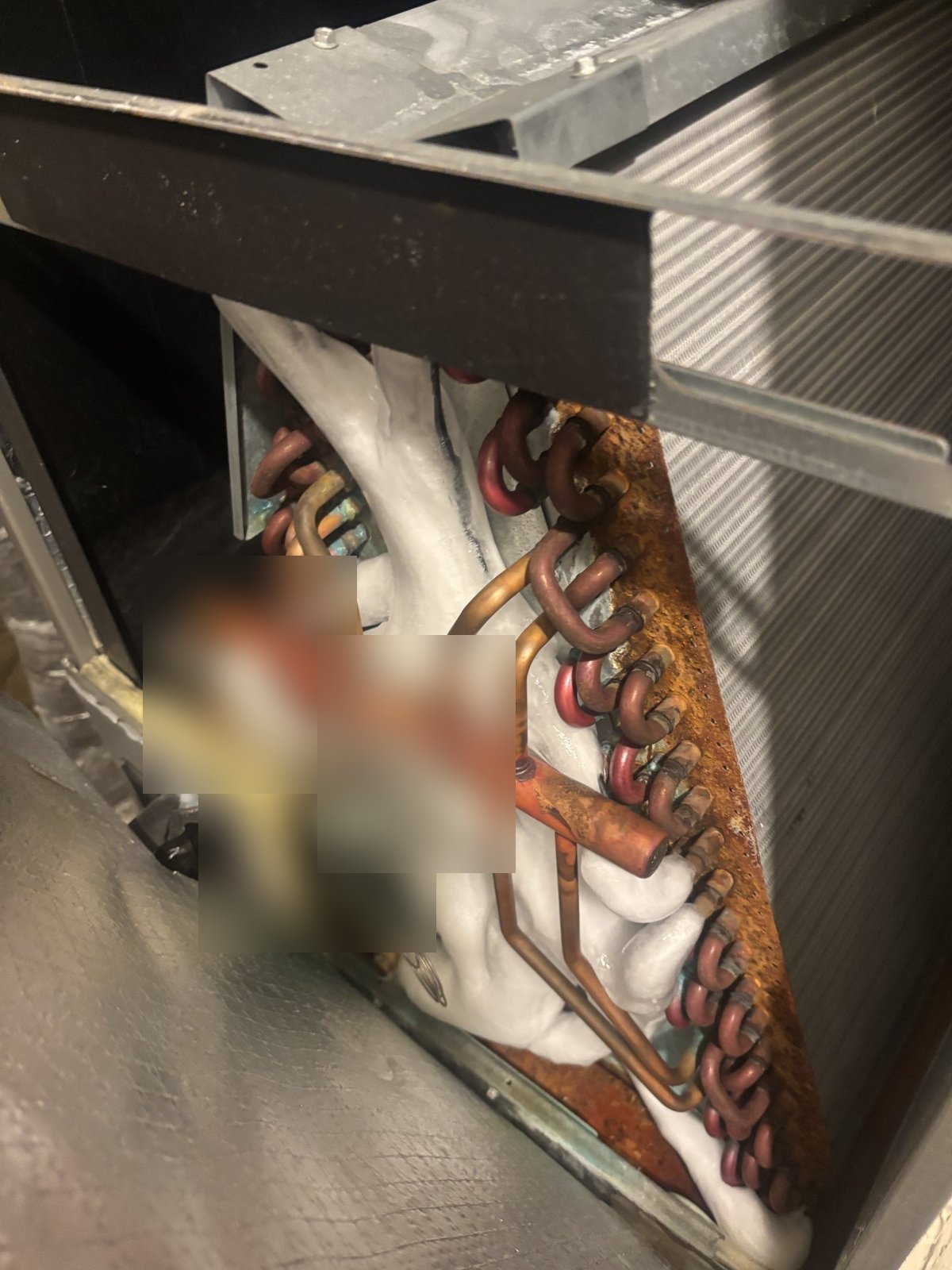
Can gutters dripping on a heat pump cause it to freeze?
Yes, and it's one of the most common causes of a frozen heat pump that we see in Georgia. It's also one of the easiest to fix, because it has nothing to do with the heat pump itself.
The heat pump's defrost cycle is designed to melt frost from the coil. It isn't designed to melt a steady drip of water falling onto the top of the unit. When a gutter overflows, a downspout empties beside the unit, or the roof edge drips right above it, that water lands on the fan guard, the top panel, and the coil. In freezing weather, each drop freezes where it lands. Over a night, it can build into a sheet of ice on the top of the unit, jam the fan blade, and close off the coil.
What to look for:
- Icicles hanging from the gutter or roof edge above the outdoor unit
- Ice concentrated on the top of the unit or on one side, not evenly across the coil
- A downspout that empties onto the ground near the unit, especially if the ground slopes toward it
- Clogged gutters full of leaves, which overflow during rain
The fixes are straightforward: clean the gutters, add or extend a downspout, add a splash block or diverter, or have a small roof diverter installed above the unit. In the fall, when gutters around Fayetteville, Tyrone, and Senoia fill with leaves from oaks and pines, this is worth checking before the first freeze.
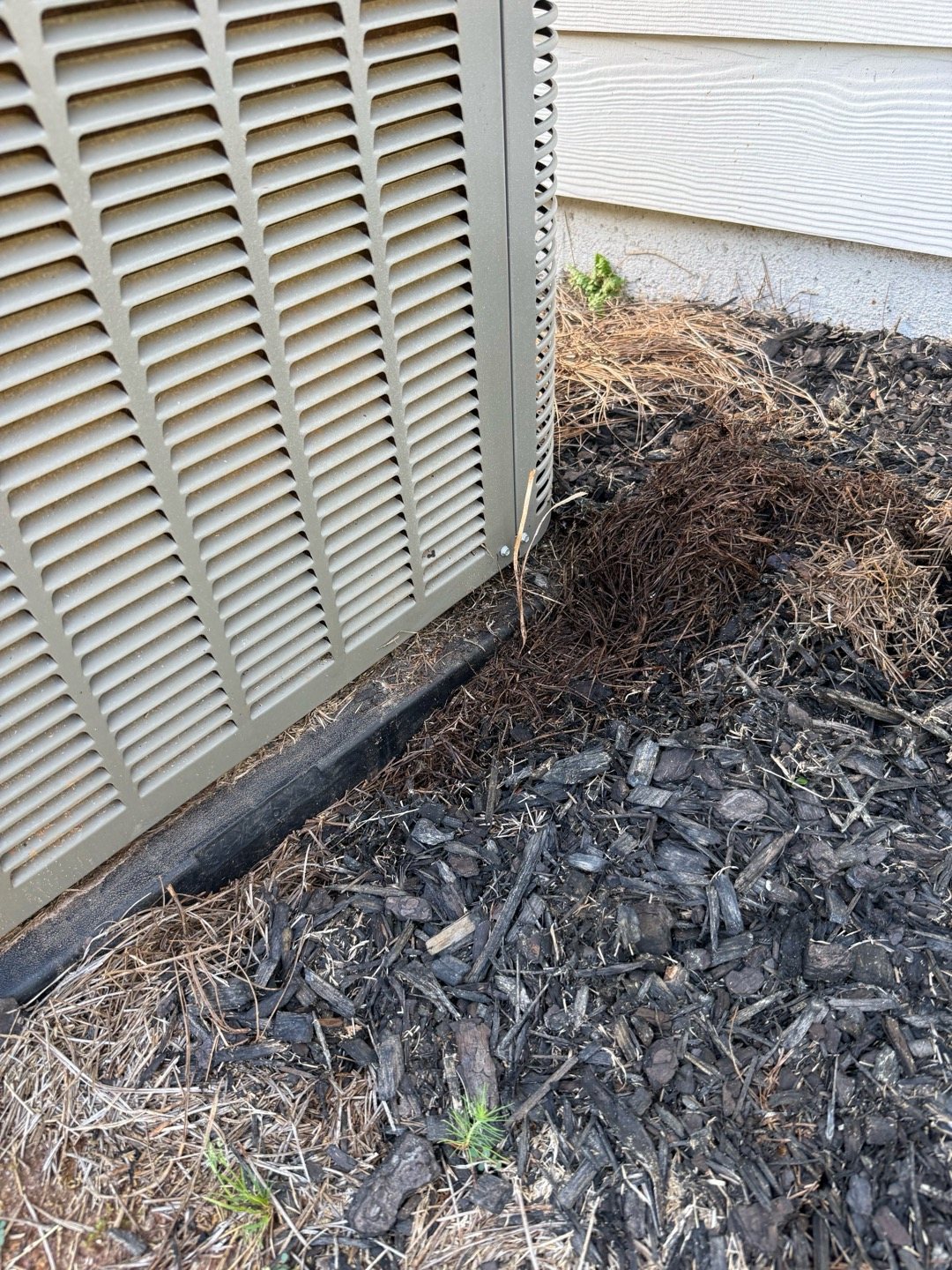
Drainage matters just as much. A heat pump should sit on a pad or risers that keep it a few inches above the ground, so defrost meltwater can drain out of the bottom. If the unit sits in a low spot, or is surrounded by mulch, pine straw, or leaves, that water pools and refreezes, and ice grows from the bottom up.
What about freezing rain and ice storms in Georgia?
Ice storms are a special case. When freezing rain coats your heat pump, it's not the heat pump's fault, and it can usually recover on its own once the weather breaks. But there are a few things worth knowing.
Our part of Georgia doesn't get much snow, but it does get the worst kind of winter weather: freezing rain. When rain falls through a layer of below-freezing air near the ground, it freezes on contact. Anyone who remembers the ice storms that have hit metro Atlanta over the years has seen what freezing rain does to trees, power lines, and cars. It does the same thing to outdoor heat pumps, coating the top, the fan guard, and the coil in a hard glaze.
During an ice storm:
- Expect the heat pump to defrost more often and work harder. It may not keep up with ice falling from the sky, and that's normal for the duration of the storm.
- Use emergency heat if the heat pump is iced over. If the unit is coated and the house is losing temperature, switching to emergency heat lets the electric heat strips carry the load while the heat pump is out of action.
- Don't try to chip or pry the ice off. We'll say this more than once, because it's the most common way homeowners damage a heat pump.
- Watch out for power outages. Ice on power lines often means outages. When power comes back on after a long outage in cold weather, some manufacturers recommend waiting before running the heat pump in heat mode to give the compressor's crankcase heater time to warm the oil. If you're unsure, run emergency heat for a while first.
- Check after the storm. Once temperatures climb above freezing, the heat pump should defrost itself back to normal. If it's still encased a day after the storm, or the fan won't turn, call us.
What is emergency heat or auxiliary heat, and when should I use it?
Auxiliary heat and emergency heat are the same equipment used in two different ways. Both usually mean electric heat strips in your air handler, the backup heater that kicks in when the heat pump needs help.
Auxiliary heat (AUX) turns on automatically. The thermostat calls for it when the heat pump can't keep up on a very cold day, when you raise the thermostat several degrees at once, or during a defrost cycle. Seeing "AUX" on the thermostat now and then on a cold morning is normal.
Emergency heat (EM HEAT or E-HEAT) is a setting you choose by hand. It turns the heat pump off and runs only the backup heat. It's meant for exactly what it sounds like: emergencies, such as when the heat pump is frozen, broken, or iced over in a storm.
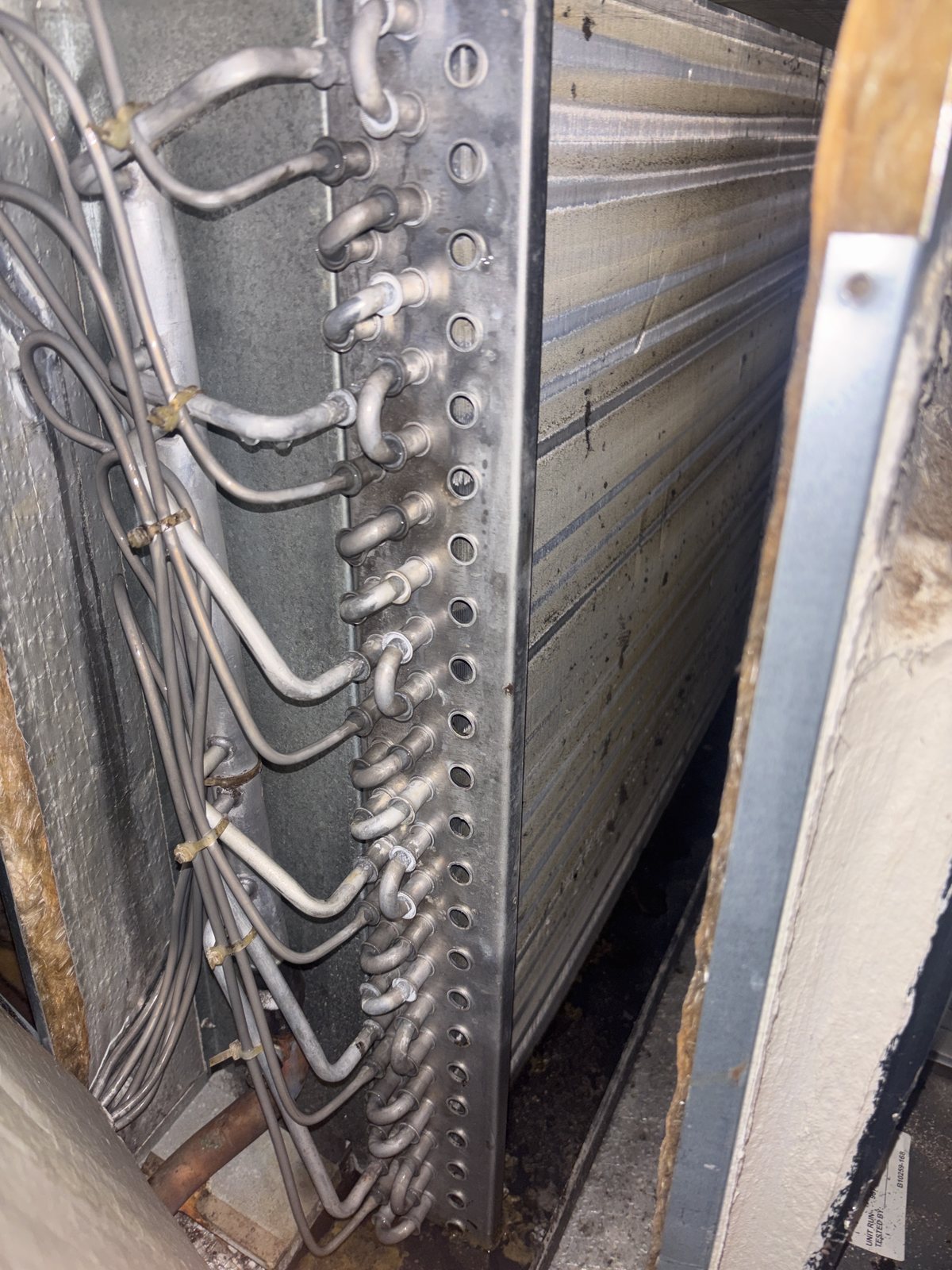
Here's what you should know:
- Use emergency heat if the outdoor unit is heavily iced, making grinding or scraping noises, or not running at all. It protects the heat pump while keeping your house warm.
- Don't leave it on longer than you need to. Electric heat strips use a lot more electricity than a heat pump to make the same amount of heat. Running on emergency heat for weeks will show up on your power bill.
- If AUX is on all the time, even on mild days, something's wrong. A frozen outdoor coil is one of the most common reasons, along with low refrigerant, a stuck defrost cycle, or a thermostat that's set up wrong.
- Not every system has heat strips. Some heat pumps are paired with a gas furnace as backup, a setup called dual fuel. Your thermostat may handle backup heat differently on those systems.
What can homeowners safely do about a frozen heat pump?
You can do a few simple, safe things that often solve the problem, or at least keep it from getting worse. Some things you should never do.
Safe things to try:
- Look first. Is it light frost that clears every so often, or thick ice that's growing? If it's light frost and the house is warm, leave it alone.
- Check the air filter. Pull it and replace it if it's dirty. Make sure vents and return grilles inside the house are open.
- Clear around the unit. Rake leaves, pine straw, and mulch at least a couple of feet back. Trim back shrubs. Make sure nothing is stacked against the cabinet.
- Look up. Check for gutters or a roof edge dripping on the unit. If water is dripping on it, fix the gutter or redirect the water.
- Check the drainage. Make sure the unit isn't sitting in a puddle and that meltwater can run away from the base.
- Rinse gently with water, if the ice is light. Some manufacturers allow running a gentle stream of room-temperature water from a garden hose over the coil to help melt ice. Turn the system off at the thermostat first. Never use hot water, and never use a pressure washer.
- Switch to emergency heat if the unit is heavily iced. That keeps the house warm and takes the strain off the heat pump until a technician can look at it.
Never do these:
- Never chip, scrape, or pry the ice off. The fins on the outdoor coil are thin aluminum, and the copper tubing behind them carries refrigerant under pressure. A screwdriver, ice scraper, or hammer can puncture a tube in a second, and then a frozen heat pump becomes a refrigerant leak and a much bigger repair.
- Never pour boiling or hot water on the unit. Sudden heat on a frozen coil can stress the metal, and the runoff will refreeze around the base.
- Never use a heat gun, torch, or space heater on the coil. You'll damage the coil, wiring, or plastic parts, and you're mixing electricity with water and ice.
- Never run the heat pump with the fan blade frozen in place. The motor can burn out trying to turn a blade locked in ice.
- Never open the electrical panel. The outdoor unit has high voltage inside it.
When should you call for a frozen heat pump?
Call a technician if the ice doesn't clear on its own, if the heat pump isn't keeping the house warm, or if something sounds or looks wrong. Waiting usually makes the repair bigger, not smaller.
Call us if:
- The outdoor unit is covered in thick ice, not just light frost
- The frost never clears, even after an hour or two of running
- The fan isn't spinning, or you hear grinding, scraping, or buzzing
- The ice is on the top of the unit or the fan, not just the coil
- The heat pump never seems to go into defrost, or seems stuck in defrost, blowing cool air for long stretches
- The thermostat shows AUX all the time, or your power bill jumped
- The heat pump froze once, you fixed what you could, and it froze again
- You see oily spots on the outdoor unit or hear hissing, which can point to a refrigerant leak
When we come out for a frozen heat pump, here's what we check:
- The defrost system. We test the defrost board, the defrost sensor and its contact with the coil, and whether the reversing valve shifts when it's told to. On many units, we force a defrost cycle and watch it happen.
- The outdoor fan. We test the motor, the capacitor, and the fan relay, and check the blade for damage.
- The refrigerant charge. We connect gauges, measure pressures and line temperatures, and check whether the system is charged correctly. If it's low, we look for the leak.
- Indoor airflow. We check the filter, the blower, and the indoor coil.
- The surroundings. We look for gutter drips, poor drainage, low pad height, and clearance problems.
- The backup heat. We make sure the heat strips are working, because they keep your house warm during defrost and emergencies.
- We explain what we found in plain English, and what it'll take to fix it.
What does a frozen heat pump mean for homes in Tyrone, Peachtree City, Fayetteville, and Newnan?
Heat pumps are everywhere in our part of Georgia, because our winters are usually mild enough for them to do most of the heating. But our particular kind of winter, damp and hovering around freezing, is exactly the weather that makes heat pumps frost up.
- Damp cold is frost weather. Mornings in the 30s with high humidity or fog, which are common across Fayette and Coweta County from December through February, are when frost forms fastest. A dry 20-degree day in the mountains actually frosts a coil less than a damp 36-degree morning in Peachtree City.
- Freezing rain, not snow. We get more ice than snow, and ice is harder on outdoor units.
- Leaves and pine straw. Oaks and pines across Tyrone, Fayetteville, Newnan, and Senoia drop a lot of leaves and straw in the fall, which clog gutters and pile up around outdoor units right before the coldest months.
- Units tucked against the house. Many homes in South Atlanta have the outdoor unit right under a roof edge or next to a downspout, which makes gutter drips one of our most common winter calls.
- Heat pumps that run all year. In our climate, a heat pump cools for most of the year and heats for the rest, so it rarely gets a break. Small problems like a weak capacitor or a slow leak tend to show up on the first cold snap.
If you live in Tyrone, Peachtree City, Fayetteville, Newnan, or Senoia, we're nearby, and our technicians have been thawing out heat pumps on cold Georgia mornings for decades. Our heating services and HVAC repair pages explain more about how we work.
How does the JD Air Care Plan help keep a heat pump from freezing?
A fall heating tune-up catches most of the problems that freeze a heat pump in January: a weak fan capacitor, a loose defrost sensor, a slow leak, a dirty coil, or leaves piled up around the unit. The JD Air Care Plan is built around getting those checks done before the cold arrives. Plans start at just $15 a month, and members get:
- Two tune-ups a year, spring for cooling and fall for heating, including the defrost controls, outdoor fan, refrigerant charge, and backup heat on heat pumps
- Free standard filters
- A $0 service fee when you need us
- Priority scheduling, so members get seen first on the first cold snap
ENERGY STAR's maintenance checklist recommends a pre-season checkup for your heating system and checking your air filter every month, which are the same things that keep a heat pump defrosting the way it should. Our phone line is answered 24/7, so you can always reach a person to get on the schedule. See the membership page for full details, or read our guide on how often to service your heating and AC.
Heat pump freezing up? Get Service Now
If your heat pump is covered in ice, stuck in defrost, or leaning on emergency heat, call John Davis Heating & Air at 770-460-9232. We're a family-owned company working out of our shop at 1525 Senoia Rd Suite G in Tyrone, and we've been taking care of homes across South Atlanta since 1968, including HVAC repair in Tyrone, Peachtree City, Fayetteville, Newnan, and Senoia, plus the rest of Fayette County and Coweta County. See all of our service areas.