
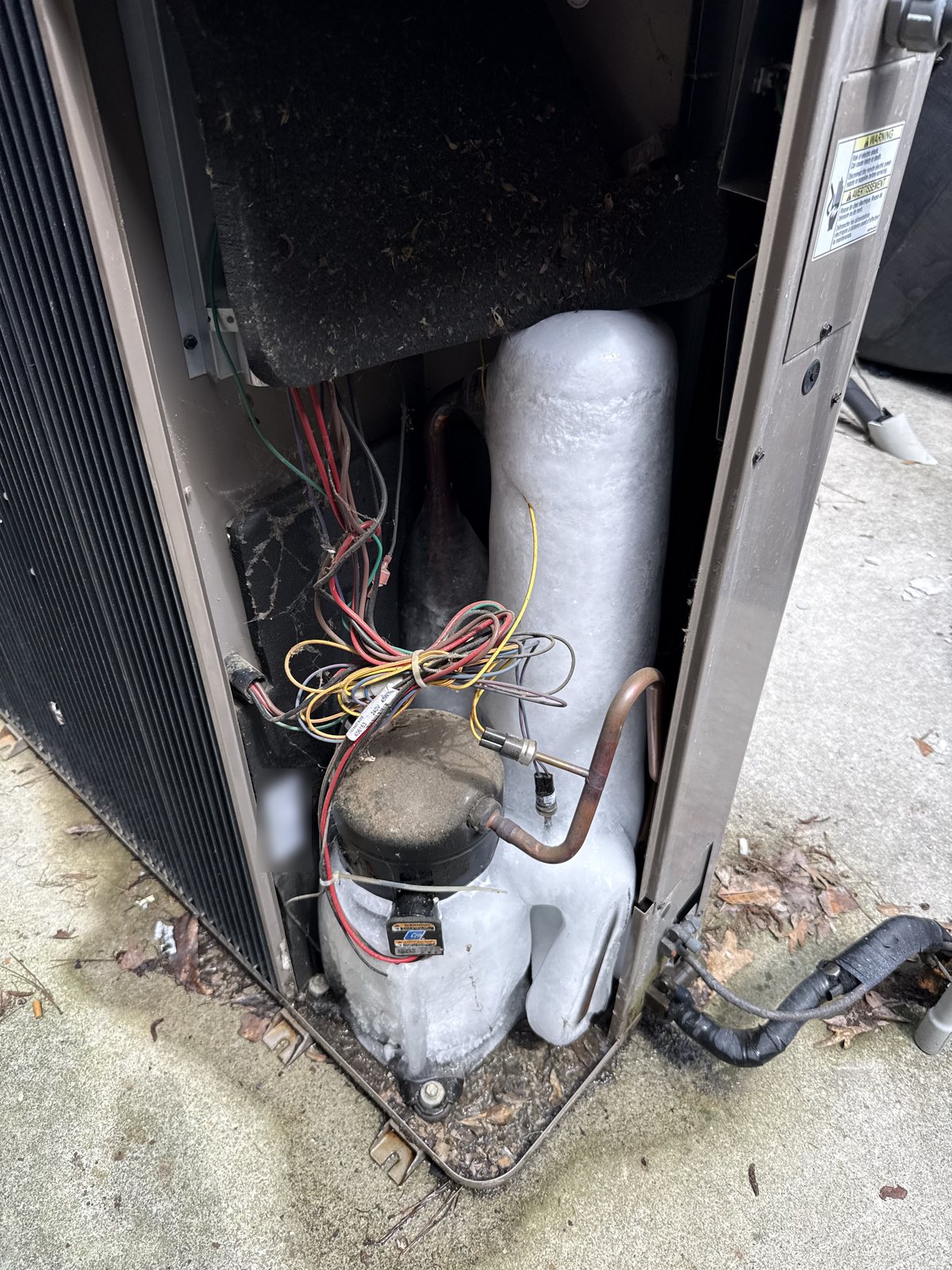
The call usually comes in late on a summer afternoon. The thermostat says 74, the house feels like 80, and the homeowner says what almost everyone says: "It's running. I can hear it running. It just isn't cooling." That sentence is the start of a small mystery. In our experience across Tyrone, Peachtree City, Fayetteville, Newnan, and Senoia, the answer is usually less dramatic than people fear: a part that wore out, a coil that got dirty, or air that can't get where it needs to go. Usually not a whole new system.
This guide walks through how an air conditioner actually cools, what you can safely check yourself, what each symptom usually points to, and when it's time to shut it off and call a professional. The short version lives on our HVAC FAQ page. This is the long one.
| What you notice | What it usually means | What to do |
|---|---|---|
| Indoor fan is blowing, but the air feels room temperature | The outdoor unit isn't running: a tripped breaker, a failed capacitor or contactor, or a safety switch | Check both breakers, then call |
| Weak airflow from every vent | Clogged filter, frozen coil, or a blower problem | Check the filter and look for ice |
| Ice on the copper lines or the indoor coil | Too little airflow or low refrigerant | Thermostat to Off, fan to On, let it thaw, call if it returns |
| Outdoor unit hums, but its fan isn't spinning | Failed capacitor or fan motor | Turn it off at the thermostat and call |
| Cools in the morning, falls behind by afternoon | Dirty outdoor coil, low charge, leaky attic ducts, or a system at its design limit | Clear debris from the outdoor unit, then call for a diagnosis |
| Indoor fan runs, outdoor unit stays off, water near the indoor unit | A clogged condensate drain tripped the float switch | Call us; the switch is protecting your ceiling |
| Downstairs is fine, upstairs is hot | Leaky or disconnected ducts, weak return air, or attic heat | Call for a duct and airflow check |
How does an air conditioner actually cool your house?
Think of your air conditioner as a heat mover, not a cold maker. Inside the house, a cold coil soaks up heat from the air the way a sponge soaks up water. A pump carries that heat outside, and the outdoor unit wrings it out into the yard. The U.S. Department of Energy puts it the same way: like a refrigerator, an air conditioner transfers heat from a home's interior to the warm outside environment.
That's why "running but not cooling" is such a useful clue. Every part of the machine can be spinning and humming while the heat stays put, because one link in the chain broke.
Here's the chain. The indoor coil, called the evaporator, holds refrigerant at low pressure, so it boils at a temperature far below the air in your house. As the blower pushes warm air across that coil, the refrigerant soaks up the heat and turns to vapor. The compressor in the outdoor unit squeezes that vapor to high pressure and high temperature, hot enough that the outdoor coil, the condenser, can shed the heat even into a scorching Georgia afternoon. The refrigerant condenses back into a liquid, passes through a metering device that drops its pressure, and heads back inside to do it all again. Interrupt any piece of that loop (the airflow across either coil, the amount of refrigerant, the compressor, or the fans) and the whole exchange stalls.
There's a second job hiding in there, and in Georgia it's a big one. DOE notes that the indoor coil removes heat and humidity from your air. On a muggy Fayette or Coweta County day, a good share of your system's effort goes into wringing water out of the air, which is why a struggling system often makes the house feel sticky before it ever feels warm.
What should you check first when your AC is not cooling?
Start with the dull stuff. The dull stuff turns out to be the answer more often than you'd think, and none of it requires a tool.
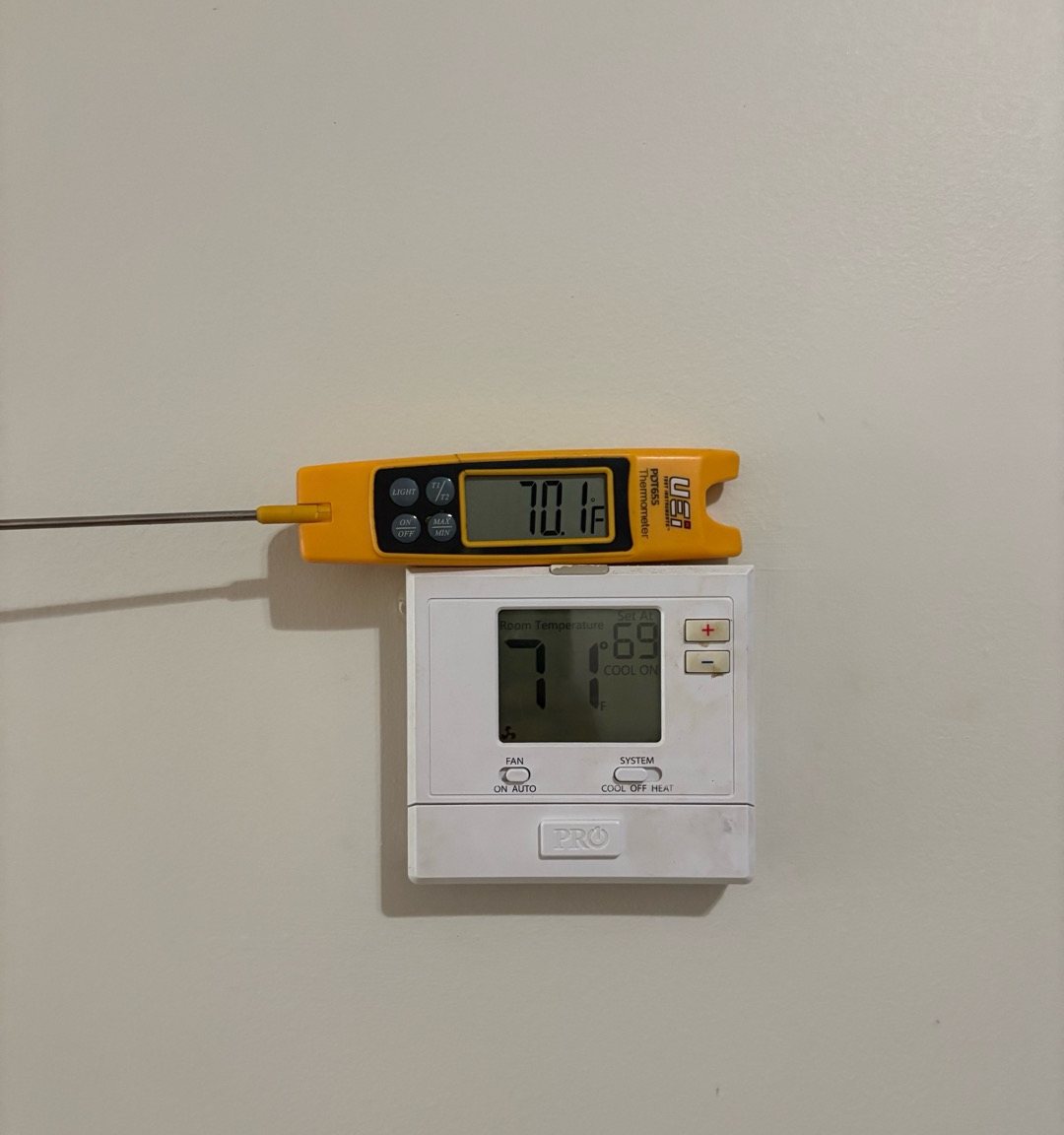
- Thermostat set to Cool, and set below the room temperature. It sounds silly, but settings get changed after a power outage, a battery swap, or a curious grandchild. If the screen is blank, try fresh batteries. DOE lists a thermostat that isn't set or reading correctly among the common reasons an air conditioner isn't cooling properly.
- Fan set to Auto, not On. With the fan on "On," the blower keeps moving air even after the outdoor unit cycles off, so you'll feel room-temperature air between cooling cycles and think the AC is failing.
- Breakers. Most split systems have two: one for the indoor unit and one for the outdoor unit, plus a disconnect box on the wall beside the outdoor unit. If a breaker trips again after you reset it, leave it off and call us. A breaker that keeps tripping is telling you something.
- Air filter. Pull it out and hold it up to a light. If you can't see light through it, it's done.
- Vents and returns. Make sure the supply registers are open and the big return grille isn't blocked by a couch or a rug.
- Outdoor unit. Step outside while the thermostat is calling for cooling. Is the big fan on top spinning? Can you hear the compressor running? Is anything packed against the coil?
- Ice. Look at the copper lines where they enter the outdoor unit and, if you can see it safely, at the indoor unit. Ice changes the plan (more on that below).
If all of that checks out and the air is still warm, stop there. Set the thermostat to Off and call. Running a struggling system for hours rarely fixes it and can turn a small repair into a big one.
The order matters for a reason. Your thermostat is really just a switch. When it calls for cooling, it sends a low-voltage signal that starts the indoor blower and closes a relay in the outdoor unit called the contactor, which powers the compressor and outdoor fan. If the indoor fan runs but the outdoor unit stays silent, the fault sits somewhere between that signal and the compressor: a breaker, the contactor, a capacitor, a safety switch, or the wiring. If the outdoor unit runs but the air is weak, the fault is more likely airflow or refrigerant. Those two branches are how a technician narrows a long list to a short one, and they're why what you saw at the outdoor unit is worth mentioning when you call.
Can a dirty air filter make your AC blow warm air?
Yes, and it's the most common and cheapest culprit on this list. A clogged filter is like trying to breathe through a pillow. Your system can't cool air it can't pull in.
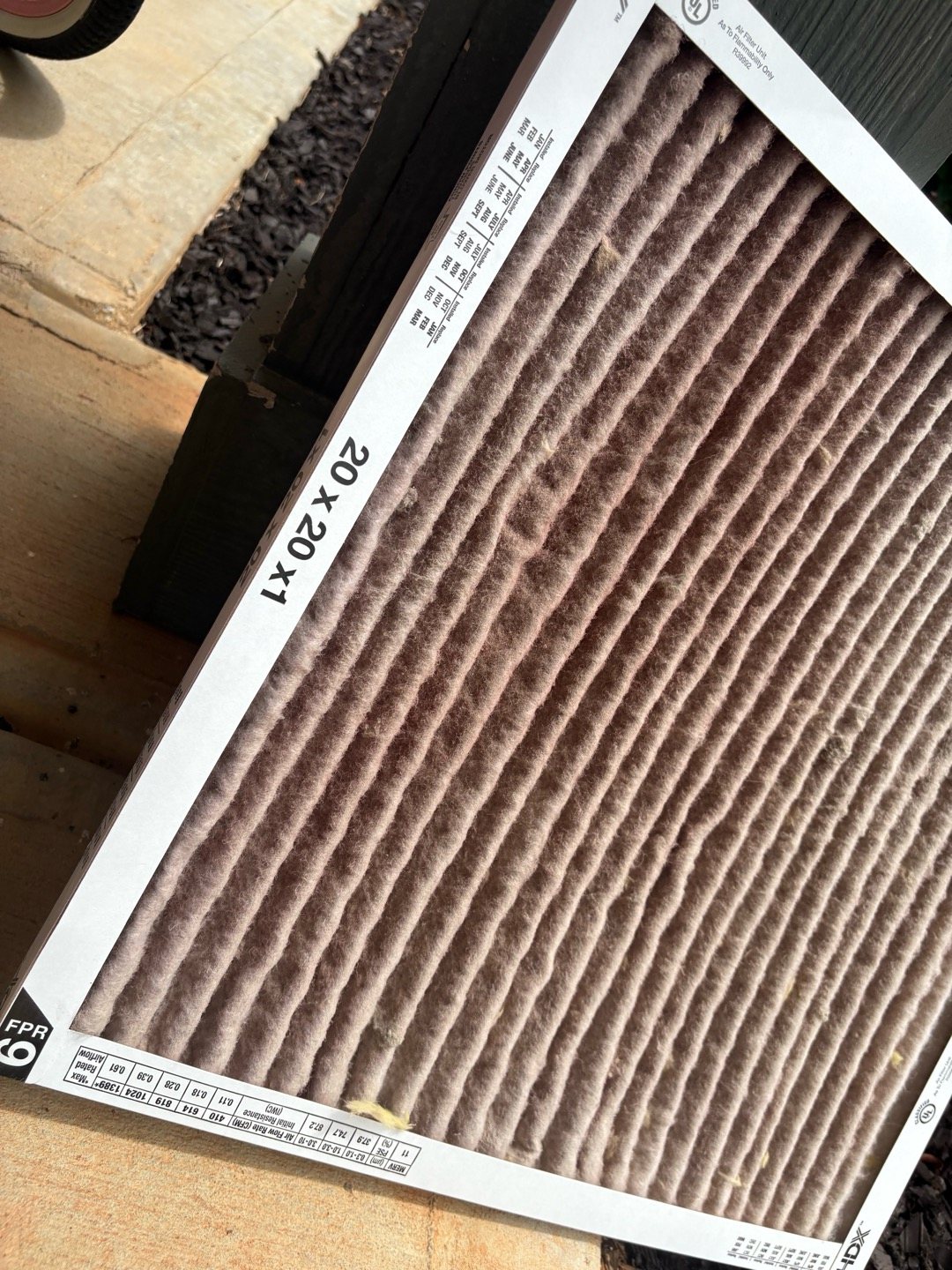
The filter sits in the return air path. As it loads up with dust, pet hair, and Georgia's yellow spring pollen, it adds resistance that technicians measure as static pressure. The blower moves less air, so less warm air crosses the indoor coil, and two things happen. Cooling capacity drops, because the coil has less heat to pick up. And the coil itself gets colder, because the refrigerant inside isn't absorbing as much heat, which is how a dirty filter can end with a frozen coil. DOE says a clogged filter restricts airflow and reduces the unit's ability to cool, and that routinely replacing or cleaning filters can lower an air conditioner's energy consumption by 5 to 15 percent. ENERGY STAR adds that a dirty filter can damage your equipment, leading to early failure.
Check your filter every month and replace it every one to three months, leaning toward monthly with pets, allergies, or heavy pollen. A denser filter isn't automatically better; a very high MERV rating can choke a system that wasn't designed for it. We cover filters in more depth in our guide on how often to service your heating and AC.
Why is your AC freezing up, and why does ice stop the cold air?
Finding ice on an air conditioner in the middle of a Georgia summer feels like a joke, but it's one of the most common calls we get. The ice is a symptom, not the problem. The coil got too cold, and the moisture it pulls out of your air froze on it instead of dripping away.
An evaporator coil is supposed to run just above freezing. When airflow drops (from a dirty filter, a blocked return, a dirty coil, or a failing blower motor) or the refrigerant charge is low, the coil's surface falls below 32 degrees and the humidity in the air turns to frost. Then the frost insulates the coil and blocks the air, which makes the coil colder, which makes more ice. Trane lists the usual causes as a clogged filter, blocked return vents, a dirty evaporator coil, low refrigerant, and thermostat issues, and warns that running a system with a frozen coil can cause major damage. The reason is the compressor. It's built to pump vapor, and a frozen coil can send liquid refrigerant back to it, which is a classic way to ruin one.
Here's what to do if you find ice:
- Switch the thermostat from Cool to Off. This is the step that protects the compressor.
- Set the fan to On. Moving warm house air across the coil helps it thaw faster.
- Don't chip at the ice. Trane cautions that it can damage the coil, and those fins are thin.
- Expect water. A lot of ice becomes a lot of water. Put towels down near the indoor unit and keep an eye on the drain pan.
- Give it a few hours, then fix the obvious. Replace the filter if it's dirty and open any closed vents before you try cooling again.
- If it freezes again, call. A coil that refreezes has something underneath it, usually low refrigerant, a blower problem, or a dirty coil, and that needs a technician.
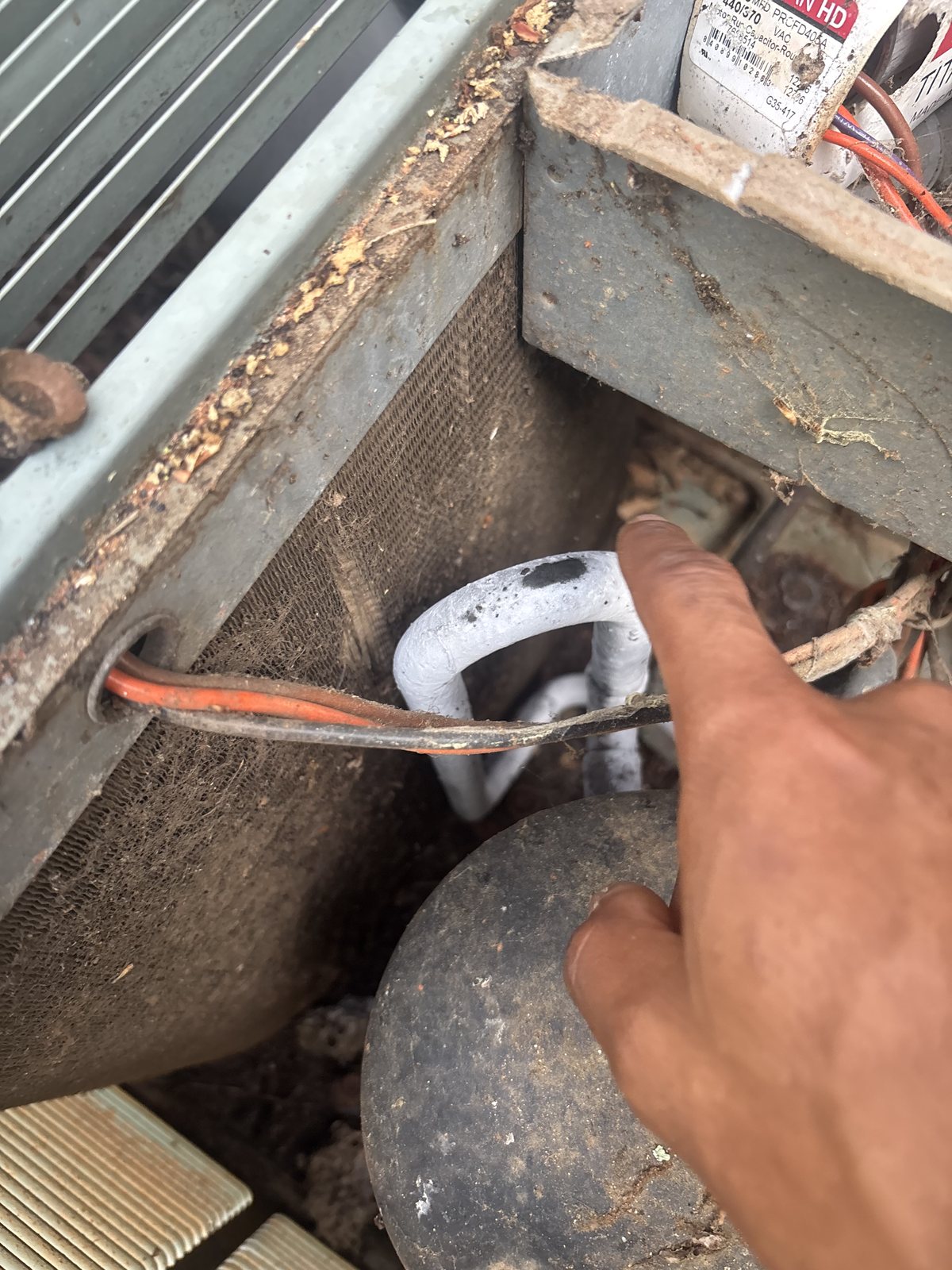
We answer this one briefly on our FAQ too, under why is my AC freezing up?
Is your AC low on refrigerant (Freon)?
People often say their AC "needs Freon," the way a car needs gas. But refrigerant isn't fuel, and your system doesn't burn through it. It travels around a sealed loop for the life of the equipment. If the charge is low, either it leaked or it was undercharged when the system was installed, as Trane notes.
Clues that point toward low refrigerant include ice on the larger copper line, a hissing or bubbling sound near the lines, a system that runs longer and longer to keep up, and a house that feels more humid than usual. Trane mentions that last one specifically: a leak can cause rising humidity levels along with poor cooling.
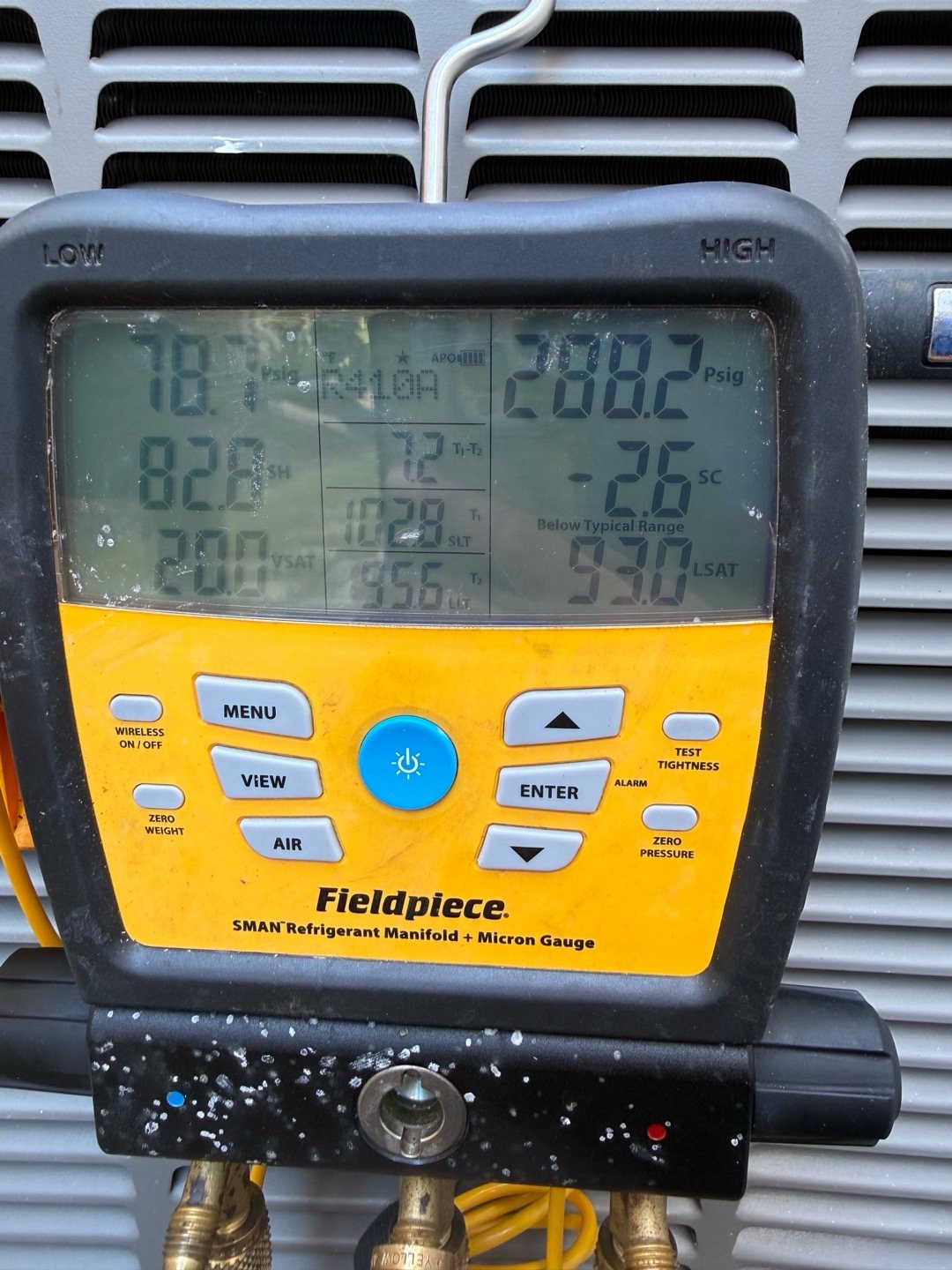
A technician confirms the charge with gauges and temperature probes, then works out two numbers called superheat and subcooling. Superheat is how far the refrigerant has warmed past its boiling point by the time it leaves the indoor coil. Subcooling is how far it has cooled below its condensing point by the time it leaves the outdoor coil. Compared against the manufacturer's targets, those two readings say whether the charge is right, low, or too high, and too high is a problem as well. ENERGY STAR notes that too much or too little refrigerant makes a system less efficient, raises energy costs, and shortens equipment life.
So the real job is finding the leak, not topping off the system and hoping. DOE's advice is to have a trained technician repair the leak and recharge the system, and the EPA goes further, telling homeowners to ask technicians to locate and repair leaks instead of "topping off" leaking systems. Refrigerant work isn't a do-it-yourself job, either. Federal rules require technicians who service equipment that could release ozone-depleting refrigerants to hold EPA Section 608 certification, and EPA says it's illegal to intentionally release refrigerant while servicing a system.
If your system is old enough to use R-22, the leak is also a good moment for an honest conversation. EPA says that as of January 1, 2020, no new R-22 is made or imported into the United States, though cleaned-up used refrigerant is still available. You don't have to replace an R-22 system, but you should weigh the repair against the age of the equipment. We'll lay out both sides plainly.
Is the outdoor unit dirty, blocked, or not running?
The outdoor unit is where your home's heat goes to leave. If it can't breathe, the heat has nowhere to go. Leaves, grass clippings, pine straw, and cottonwood fluff mat onto the thin metal fins of the coil until air can barely pass through.
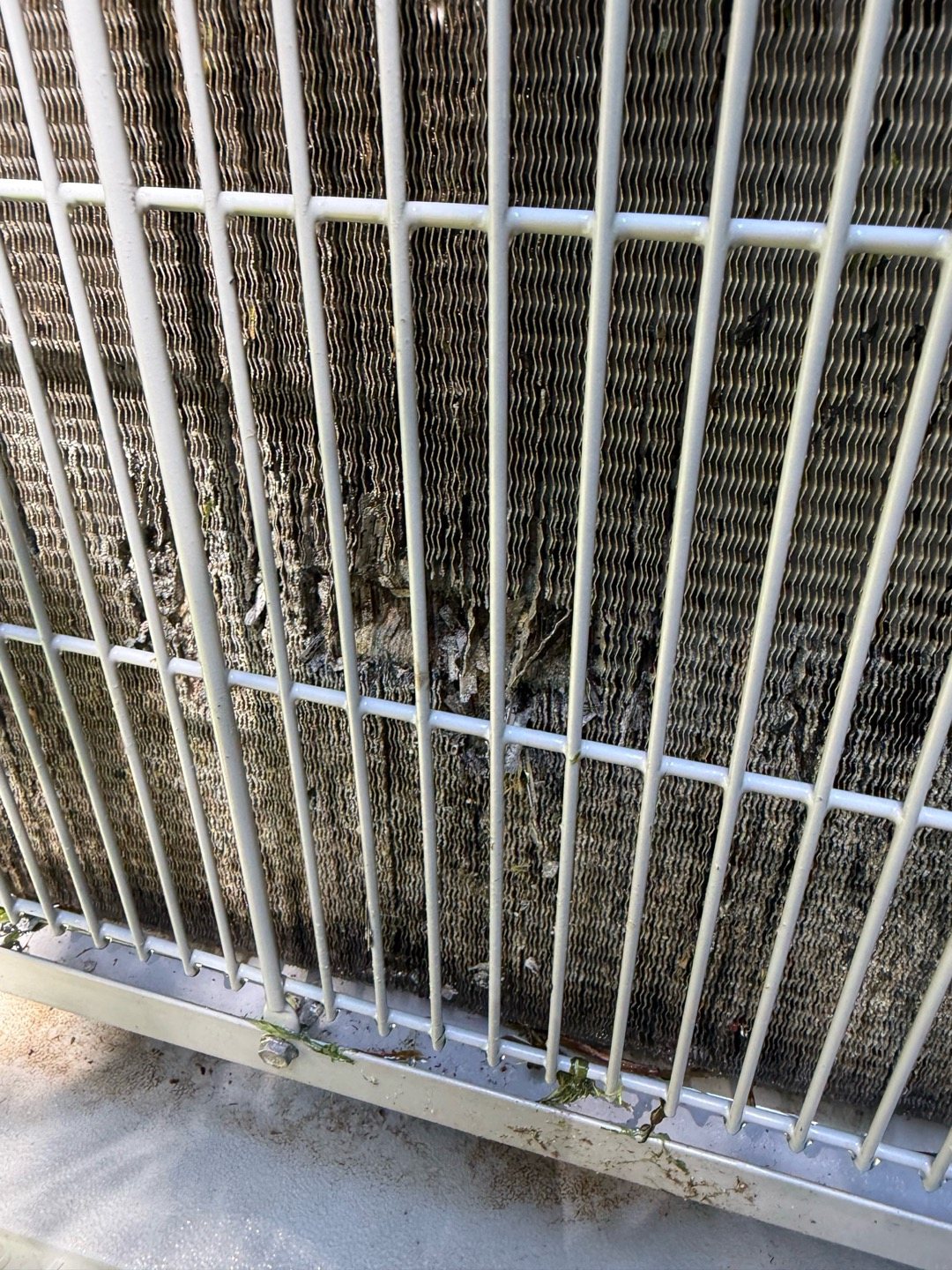
The more technical version goes like this. The condenser has to dump heat into outdoor air that may already be in the mid-90s. The hotter the air and the dirtier the coil, the higher the pressure and temperature the compressor has to produce to push that heat out. Technicians call it head pressure. More head pressure means more amps, more heat in the compressor's motor windings, and less cooling for your money. Push it far enough and a high-pressure safety switch or the compressor's internal overload shuts things down until it cools off, which can look exactly like an AC running but not cooling. ENERGY STAR says dirty coils reduce the system's ability to cool your home and make it run longer, raising energy costs and shortening equipment life.
What you can do: clear leaves, grass, and sticks away from the unit, and keep shrubs trimmed back. Trane recommends keeping landscaping at least two feet away from the outdoor unit. Skip the pressure washer, which can flatten the fins. A deep coil cleaning, where our technicians apply coil cleaner and rinse the coil properly, is part of every spring tune-up.
Why is the fan running but the AC isn't blowing cold air?
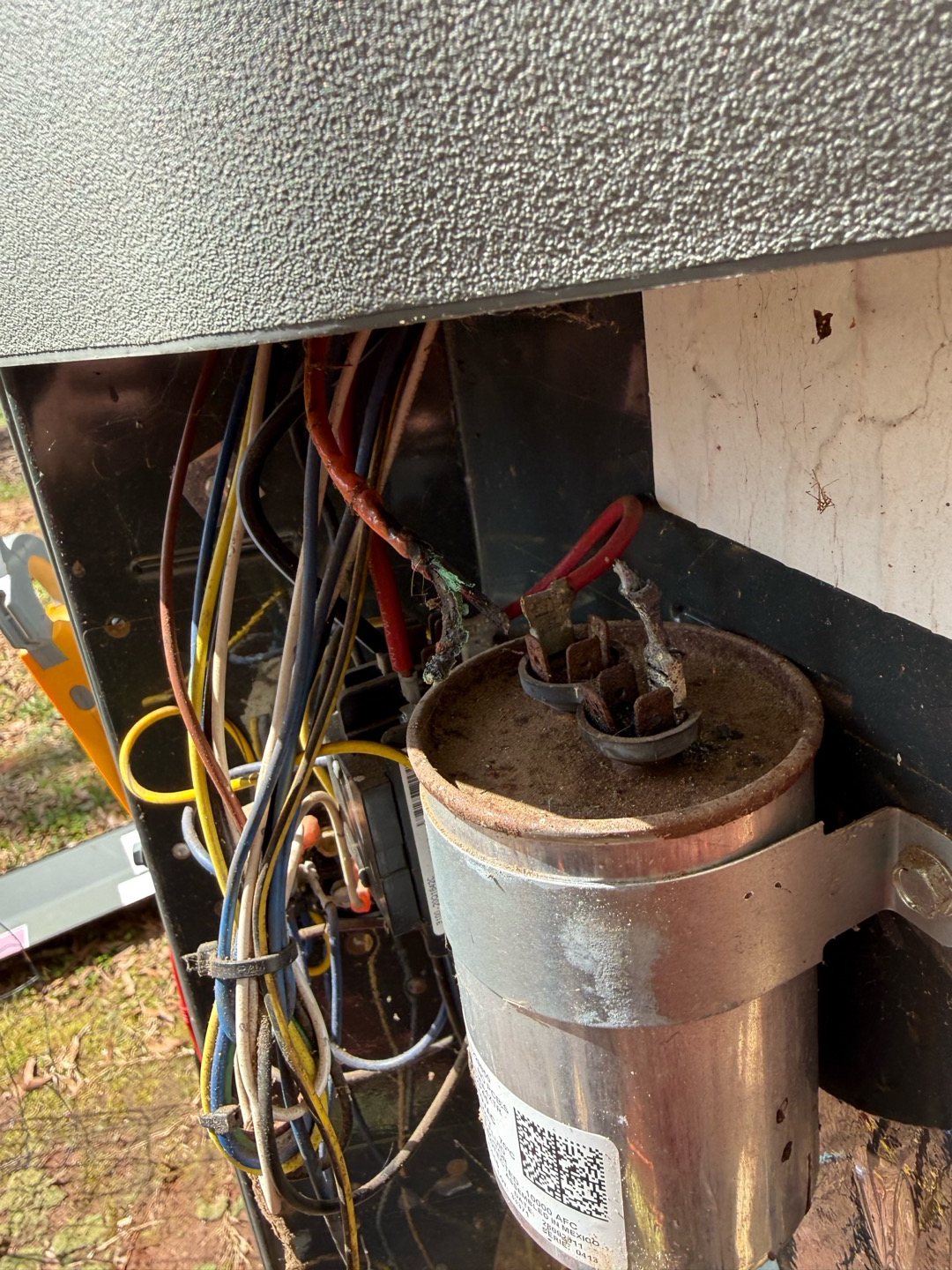
Your outdoor unit has a couple of small parts that do the heavy lifting of getting things started. When one quits, the indoor fan can keep blowing like nothing's wrong while the outdoor unit sits silent, or hums without ever starting. That's the "AC fan running but compressor not" problem people search for.
The usual suspects:
- Capacitor. A capacitor stores electrical energy and releases it to give the compressor and fan motors the push they need to start, then helps keep them running efficiently. Capacitors are rated in microfarads, and heat wears them down over time. A weak one often tests low before it fails outright, which is why we test them at every cooling tune-up. When one fails, you'll often hear the outdoor unit hum as the motor tries and fails to turn. Trane also points to a faulty capacitor as a common cause.
- Contactor. This is the relay your thermostat's signal closes to send full power to the outdoor unit. Its contacts arc a little every time the system starts, and over many summers they pit and burn. Bugs, including ants, can also get between the contacts and stop them from closing.
- Fan motor. If the outdoor fan won't spin, the unit can't shed heat, so the compressor overheats and shuts off.
- Compressor overload. A compressor that gets too hot trips an internal protector and stays off until it cools. That's often a symptom of something else, like a dirty coil or a bad capacitor, rather than a dead compressor.
One safety note: capacitors can hold a dangerous electrical charge even with the power off. Please don't open the electrical panel on your outdoor unit. That's a job for us.
Could a clogged condensate drain be shutting off your AC?
Your air conditioner is also a dehumidifier. On a humid Georgia day it pulls a surprising amount of water out of your air. That water drips into a pan under the indoor coil and runs out through a drain line. When that line clogs with algae and sludge, a float switch shuts off the cooling to keep the water from coming through your ceiling.
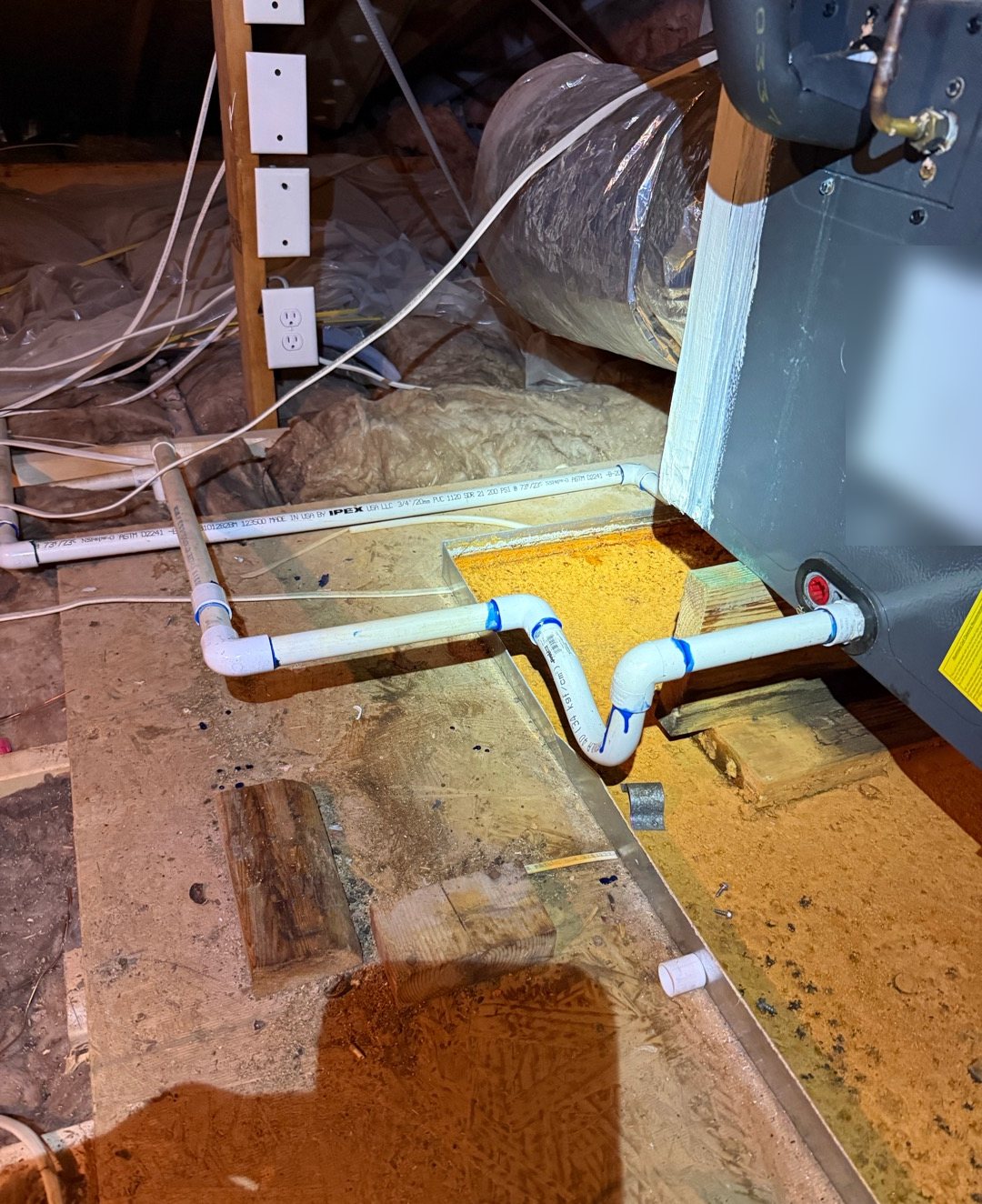
On many systems, the float switch interrupts the thermostat's call for cooling, so the outdoor unit stops while the blower may keep running. To a homeowner, that looks like an AC running but not cooling. ENERGY STAR notes that a plugged drain can cause water damage and affect indoor humidity. Some systems also use a small pump to move the water out, and Trane points out that the pump can come unplugged or the line can kink or clog. We clear the drain line and test the float switch at every spring visit.
Why does your AC run all day but won't cool below 75?
Sometimes nothing is broken at all. On the hottest afternoons of a Georgia summer, a healthy system may run nonstop and still slip a couple of degrees behind the thermostat. That's not necessarily a failure. Systems are sized for a typical hot day where you live, not for the hottest day on record, and a correctly sized system is supposed to run long on those days.
A proper sizing job starts with a load calculation. It weighs the local design temperatures, your home's insulation, windows, sun exposure, and where the ducts run, then matches the equipment to that load. Trane notes that an air conditioner can simply be undersized for the house. Oversized equipment causes its own trouble: it cools the air fast, shuts off before it has pulled out much moisture, and leaves the house cool but clammy, which is a real problem in a Georgia summer.
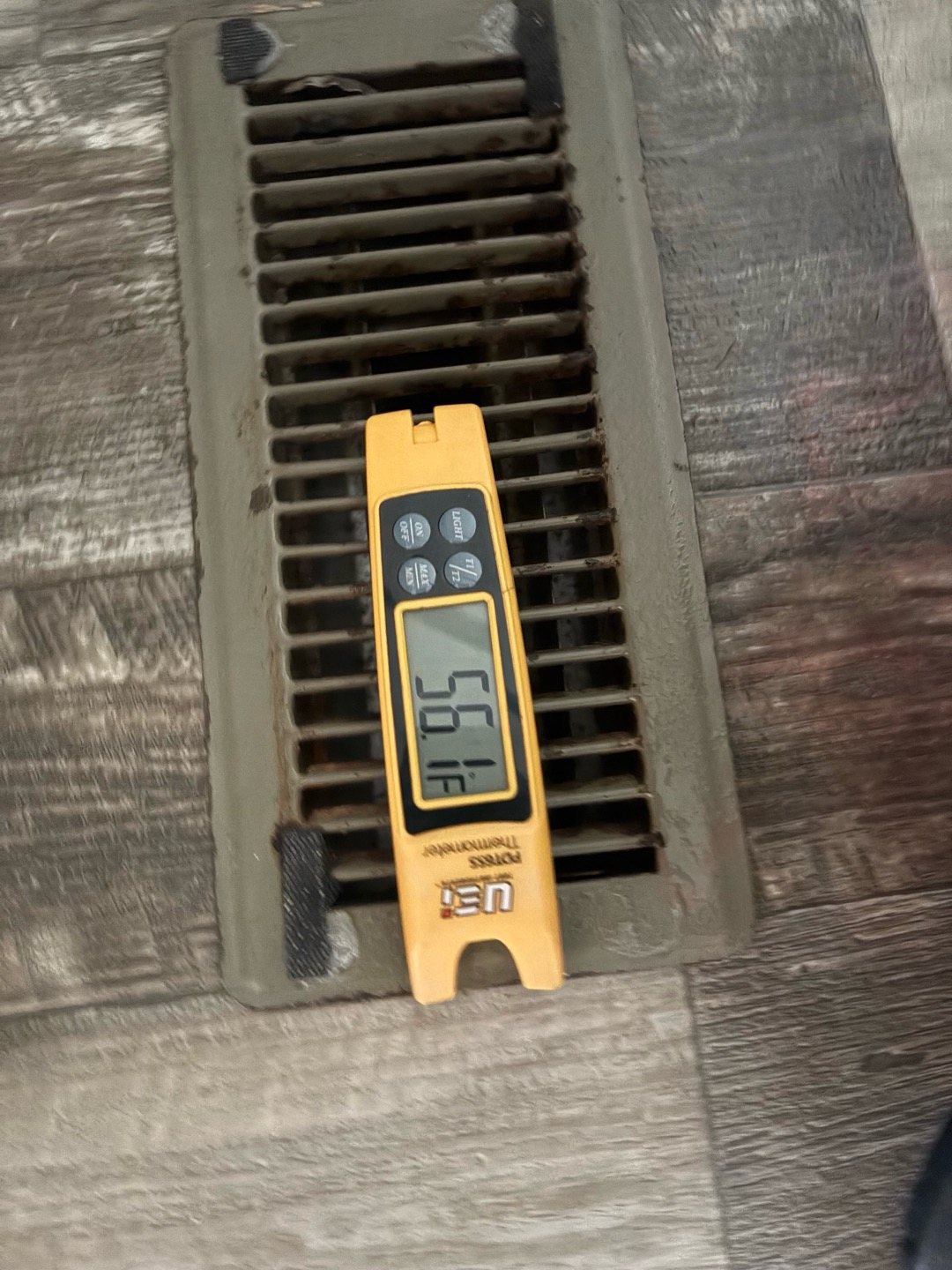
You may have heard that an AC should cool the air about 20 degrees between the return and the supply vents. Technicians do measure that temperature drop, but HVAC School, a technician training resource, calls the 20-degree figure a misleading rule of thumb. The right number depends on how hot and humid the air entering the coil is. In a hot, humid house, a perfectly healthy system spends more of its effort removing moisture and shows a smaller temperature drop. That's why a good diagnosis looks at airflow, refrigerant readings, and humidity together, not one thermometer reading.
What helps on brutal days:
- Close blinds and curtains on the sunny side of the house.
- Avoid big thermostat setbacks on the hottest days. If you let the house climb to 85 while you're at work, the system may not catch up by dinner.
- Run ceiling fans in rooms you're using. DOE says ceiling fans let you raise the thermostat setting about 4 degrees without hurting your comfort.
When it isn't normal: the system falls behind on a mild day, the gap grows week by week, or the house feels damp. Those point to a real problem worth a call.
Why is your AC not cooling upstairs, or in one room?
If part of the house is comfortable, your AC is making cold air. The problem is getting that air where it belongs.
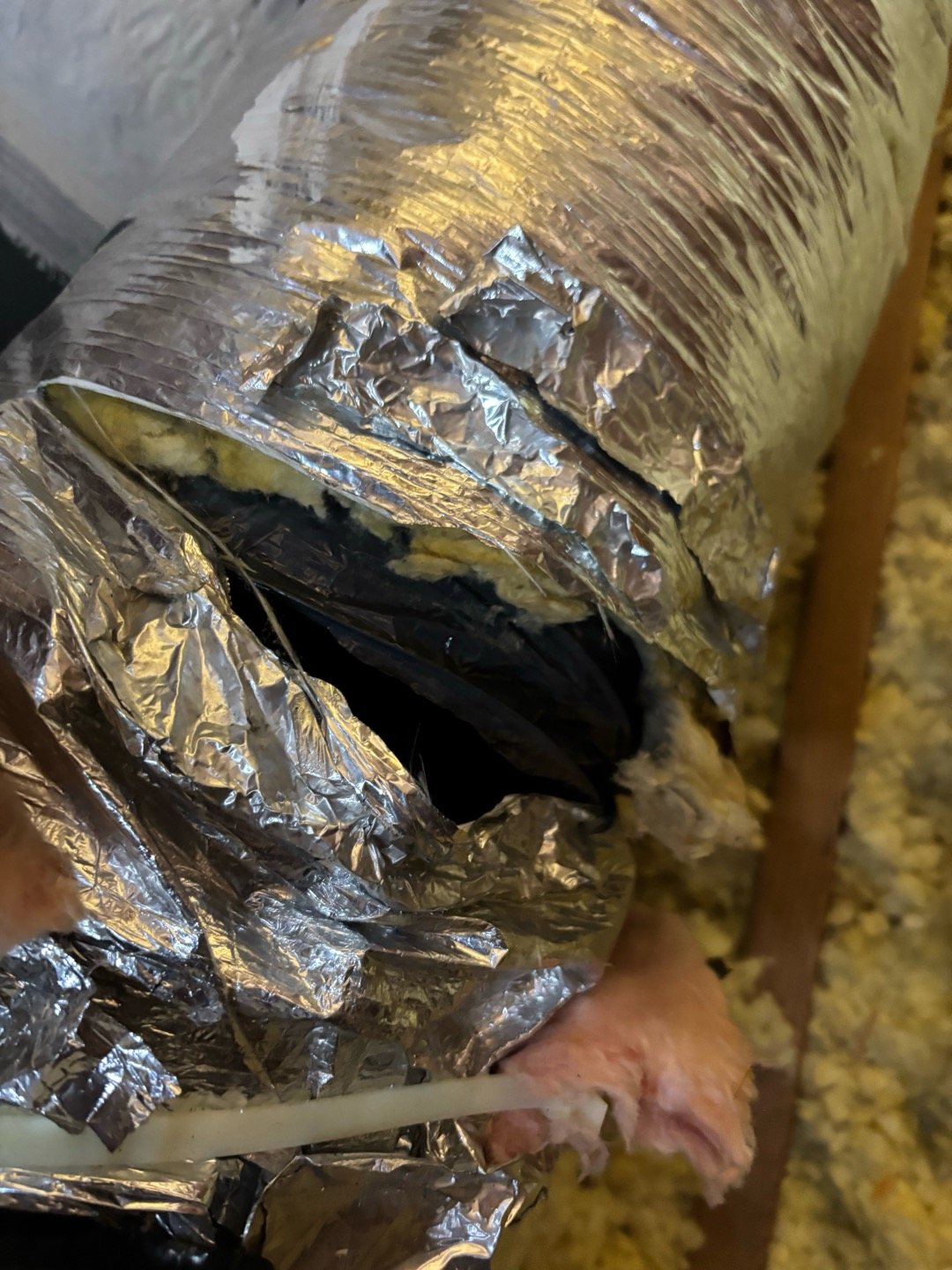
ENERGY STAR estimates that in a typical house, about 20 to 30 percent of the air that moves through the duct system is lost to leaks, holes, and poorly connected ducts, making the house hard to keep comfortable no matter how the thermostat is set. In a lot of homes around Peachtree City, Fayetteville, and Newnan, those ducts run through the attic, which is the hottest place on the property in July. A leak there dumps air you paid to cool into a space that's already baking, and a torn or disconnected duct, like the one above, can leave a room with almost nothing.
Return air matters just as much. A second floor needs a path for air to get back to the system. Bedrooms with closed doors and no return can get starved. Add the heat soaking through the roof onto the upstairs rooms, and you get the classic two-story house that's 72 downstairs and 78 up. Fixes range from sealing and reconnecting ducts to balancing dampers, adding returns, and, in some homes, zoning or a ductless unit for the problem area.
When should you turn off your AC and call a professional?
Turn the system off at the thermostat and call if:
- You see ice anywhere on the system.
- The outdoor unit hums, buzzes, or clicks but the fan doesn't spin.
- You smell burning or hear grinding or squealing. Trane's advice for any unpleasant smell from an AC is to turn off your system and contact an HVAC professional.
- A breaker trips again after you reset it.
- There's water around the indoor unit or a fresh stain on the ceiling.
- You hear hissing or bubbling near the refrigerant lines.
- The air is still warm after the homeowner checks above.
Here's why "off" is the right move. The compressor is the heart of the system and the most expensive part to replace. Running it starved of airflow, low on refrigerant, or with a failing capacitor makes it run hot and hard. Turning the system off is the cheapest insurance you'll ever buy.
Call 770-299-2833 any hour of any day. We answer the phone and schedule around the clock, and we'll get you on the schedule for the first available visit. If anyone at home is especially vulnerable to heat, like young children, elderly family members, or someone with a health condition, tell us when you call so we can prioritize.
What happens when a John Davis technician diagnoses an AC that won't cool?
We measure; we don't guess. And we tell you what we found in plain English before we talk about fixing anything.
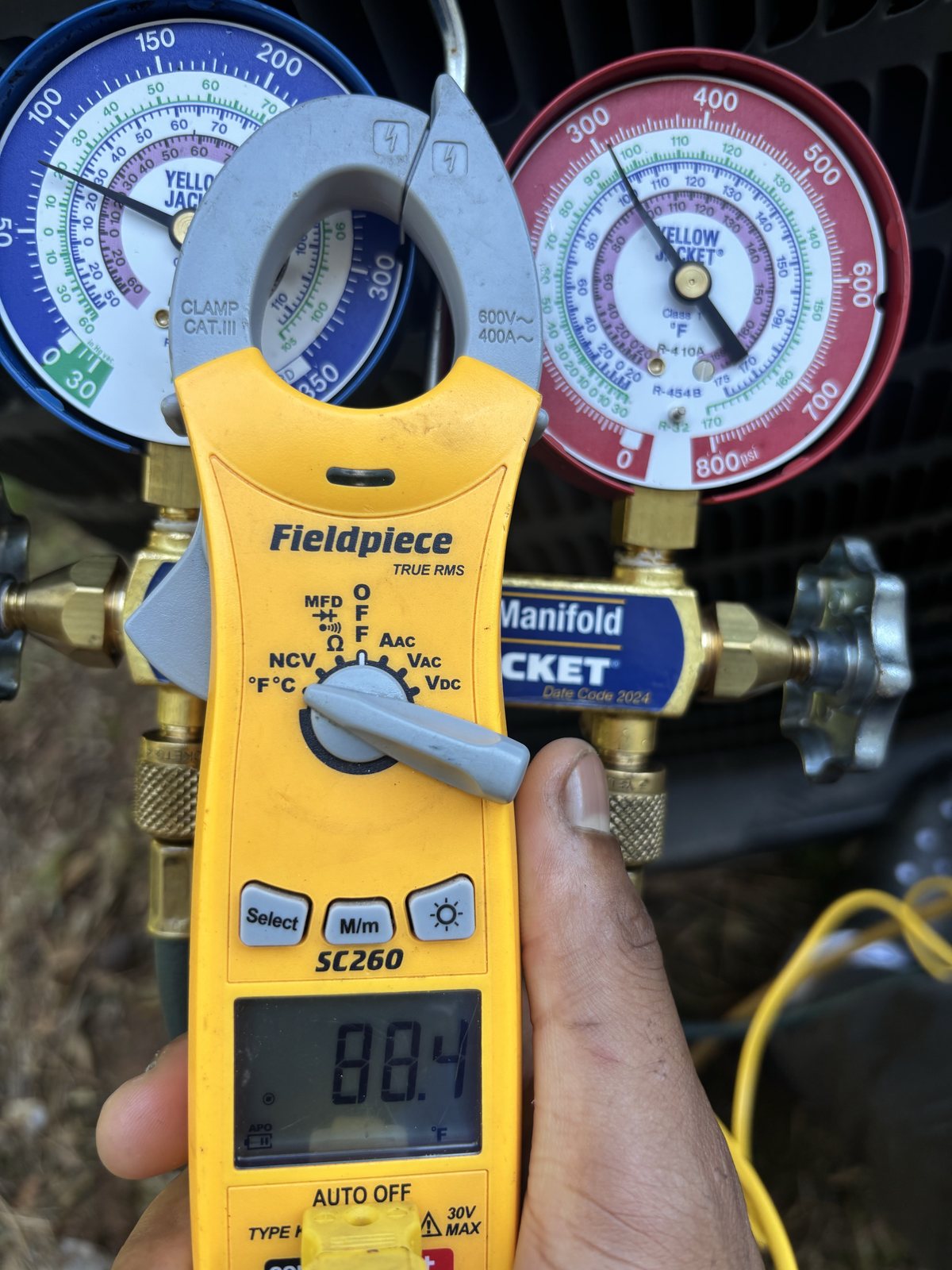
A typical HVAC repair visit for a system that won't cool goes like this:
- We listen first. What you noticed, when it started, and what you've already checked all help.
- Airflow. Filter, blower, indoor coil, and the return and supply side of the ducts.
- Electrical. Voltage and amp draw, capacitors, the contactor, wiring, and safety switches.
- Refrigerant. Pressures, superheat, and subcooling against the manufacturer's targets. If the charge is low, we look for the leak.
- Temperatures. Supply and return air, read against the conditions in your house.
- Drain. The condensate line, pan, and float switch.
- The answer. What's wrong, what's wearing out, and your options, with no pressure.
A lot of these calls end with a part and a cleaning, not a sales pitch. If a capacitor and a clean coil will get you through the next several summers, that's what we'll tell you. If the system is old and the repair is major, we'll walk you through repair versus replacement honestly and let you decide. We've been a family-owned and operated company serving South Atlanta since 1968, and the way we see it, neighbors call back the company that told them the truth. You can read more about our air conditioning services.
How do you keep your AC from quitting in a Georgia summer?
Most of the problems in this guide build slowly. Dirt collects on coils, capacitors weaken, drains grow sludge, and filters fill up long before the system finally gives out on the hottest Saturday of the year.
- Get a spring tune-up. ENERGY STAR recommends checking the cooling system in the spring, because contractors get busy once summer arrives. Our guide on how often to service your heating and AC covers what a real tune-up includes.
- Check the filter monthly. It's the one maintenance job that's all yours.
- Keep the outdoor unit clear, with plants at least two feet back.
- Keep vents and returns open, even in rooms you don't use much.
- Don't wait on small symptoms. A system that's running longer, icing lightly, or leaving the house sticky is easier to fix in May than in August.
How does the JD Air Care Plan help when your AC acts up?
If you'd rather not keep track of all that, the JD Air Care Plan does it for you. Plans start at just $15 a month, and members get:
- Two tune-ups a year, spring for cooling and fall for heating
- A $0 service fee when you need us
- Priority scheduling, so members get seen first when the weather turns
- 10% off repairs
- Free standard filters
The real value is in what doesn't happen: the weak capacitor caught in April, the drain line cleared before it trips the float switch, the dirty coil cleaned before it freezes. See the membership page for full details.
AC running but not cooling? Get Service Now
If your AC is running but the house won't cool down, call John Davis Heating & Air at 770-299-2833. We're a family-owned company working out of our shop at 1525 Senoia Rd Suite G in Tyrone, and we've been taking care of homes across South Atlanta since 1968, including AC and HVAC repair in Tyrone, Peachtree City, Fayetteville, Newnan, and Senoia, plus the rest of Fayette County and Coweta County. See all of our service areas.