Get up to $8,000 back on new HVAC systems with GA Rebates! Check to see if you qualify! 

HVAC FAQ

Frequently Asked HVAC Questions

Straight answers from the team at John Davis Heating & Air.

How often should I have my heating and AC serviced?

Twice a year, once in spring for the air conditioning and once in fall for the heat. Think of it as a checkup before the season that tries to break your system, not after.

Here's what actually happens during a proper maintenance visit. A technician measures the refrigerant charge by reading superheat and subcooling, which tells him whether the system holds exactly the amount it was built to hold. He tests the capacitor and the contactor, two parts that quietly cause a surprising share of summer breakdowns. He cleans and inspects the coils, clears the condensate drain, and confirms air is moving across the coil the way it should. In the fall he turns to the furnace, looking at the heat exchanger, the burners, the flame sensor and the ignition, and he checks gas pressure and the safety controls. Almost none of this is visible from the living room, which is the point. Our maintenance membership covers both visits.
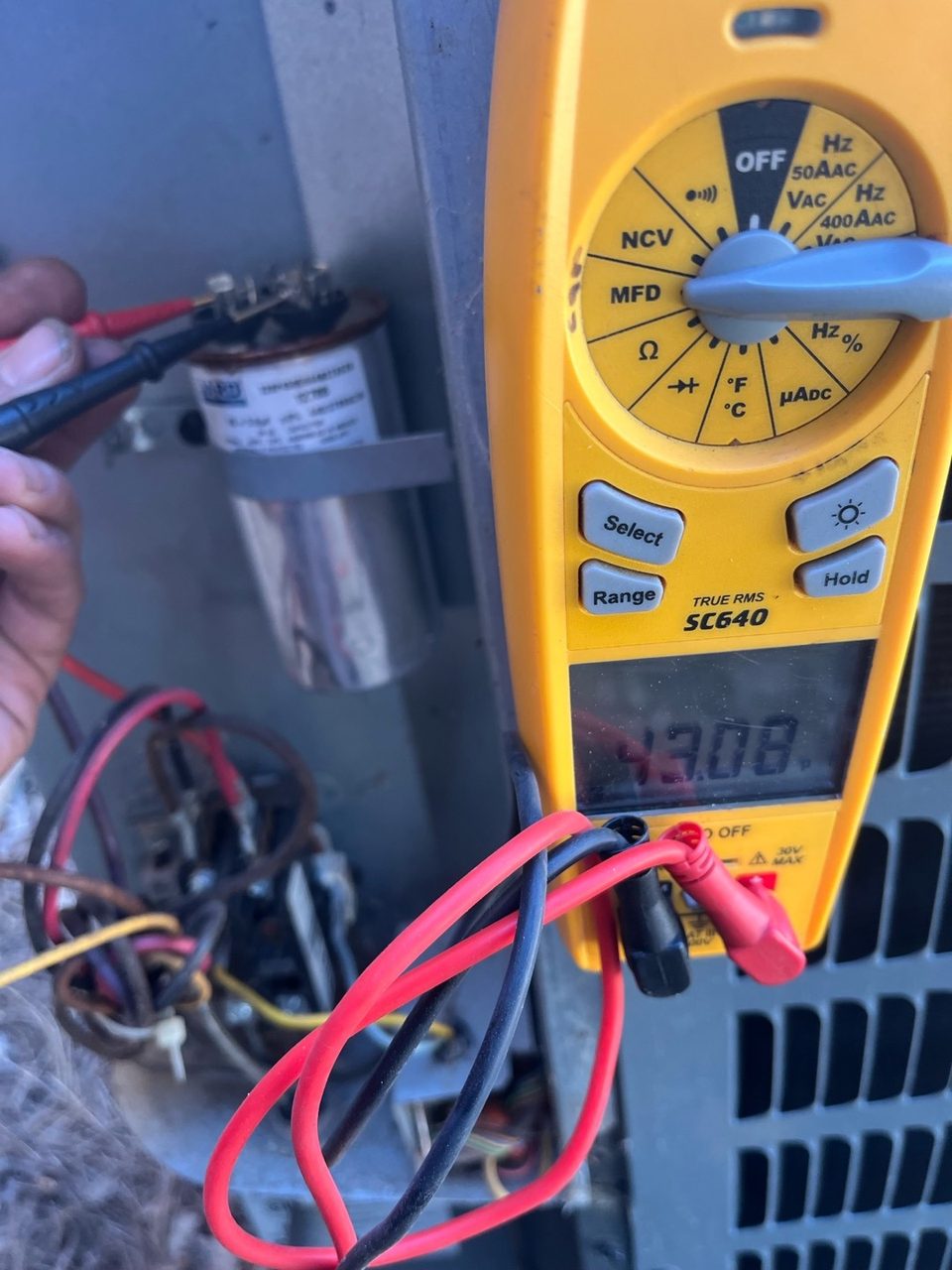
Technician using a yellow digital multimeter to test the capacitor inside an outdoor AC unit; the meter reads 43.08 microfarads
Testing a capacitor during a maintenance visit.
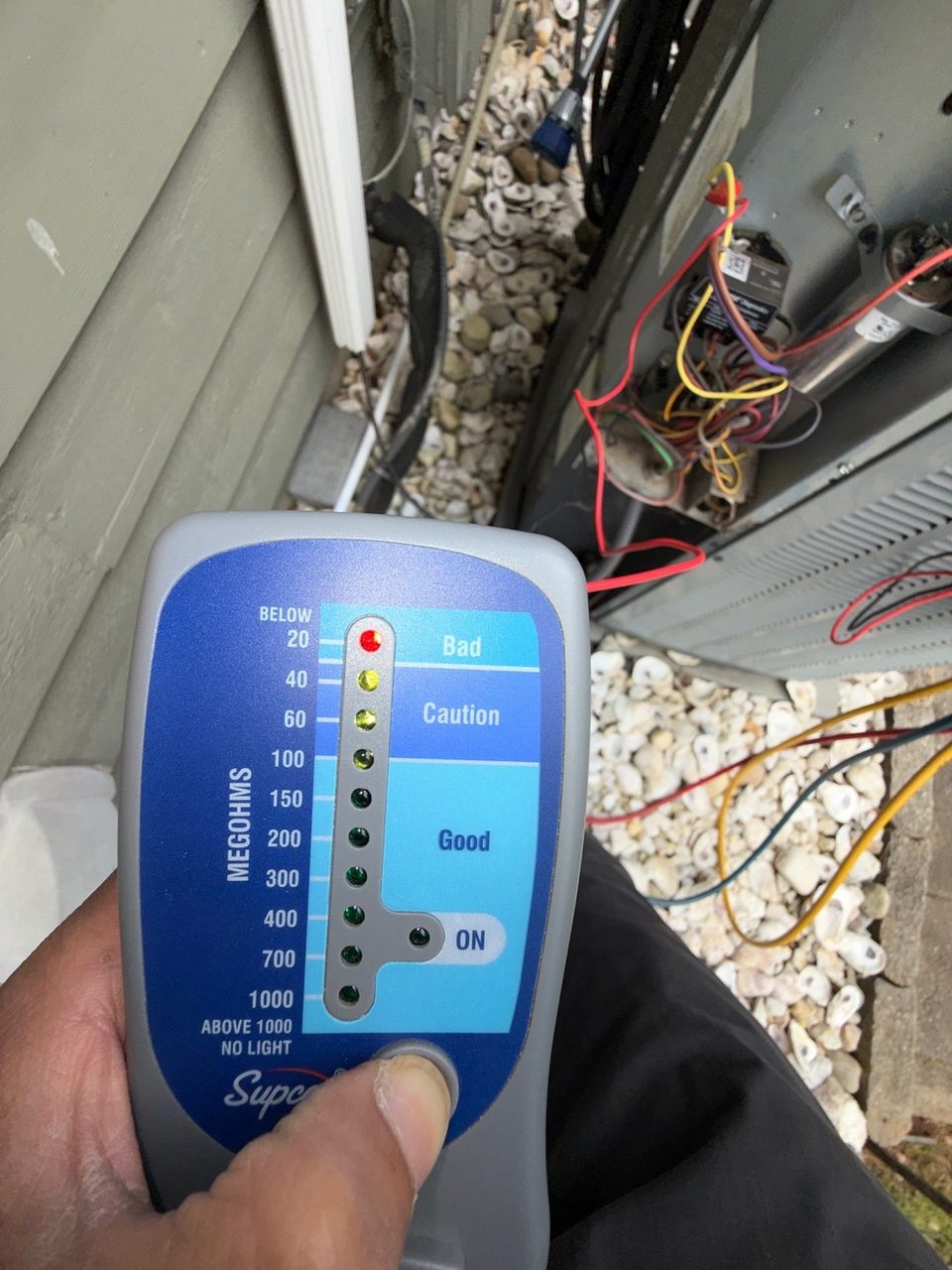
Technician holding a handheld insulation (megohm) tester in front of the open electrical compartment of an outdoor AC unit
Checking the compressor's electrical insulation with a megohm tester.
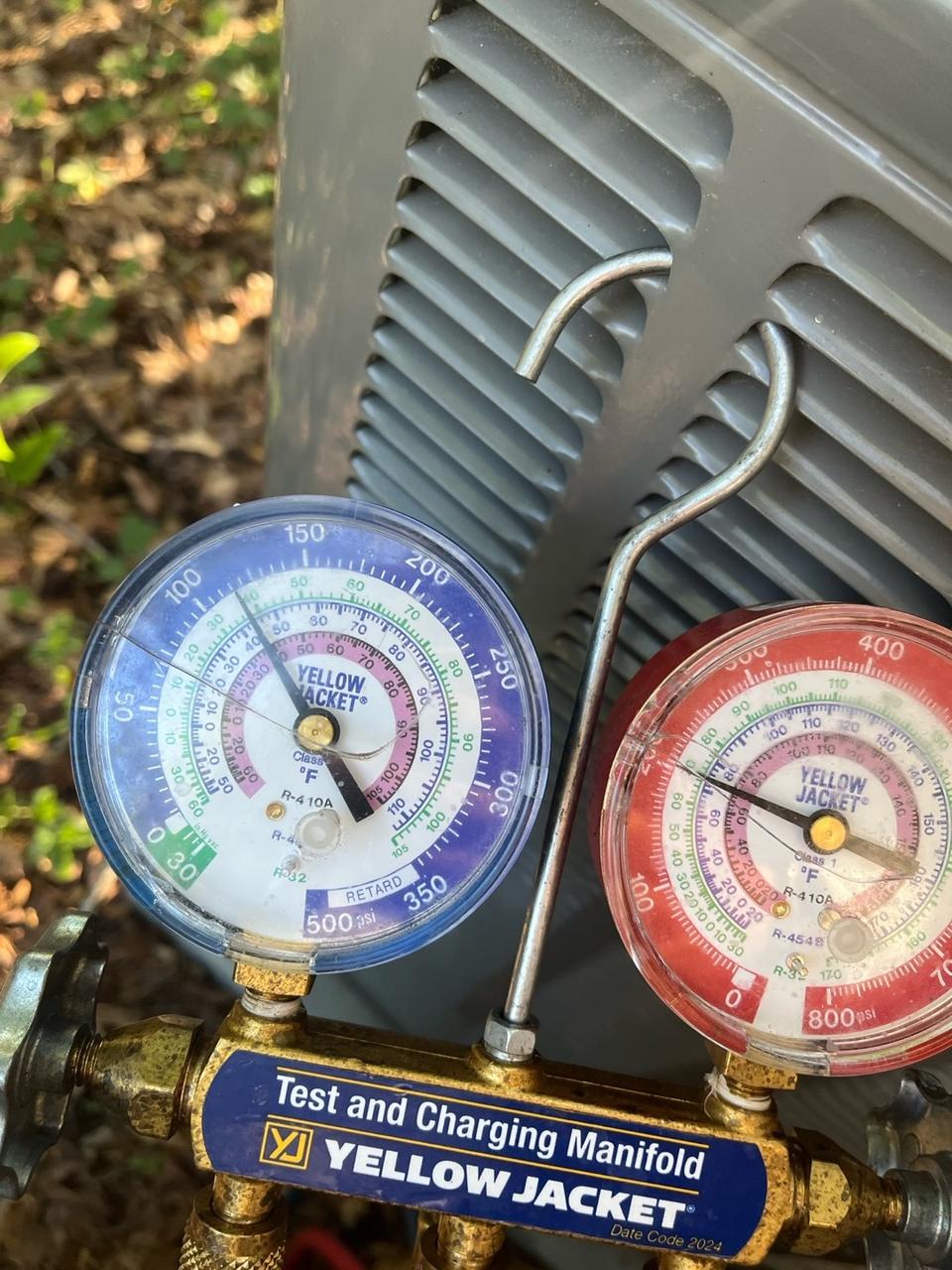
Close-up of blue and red refrigerant manifold gauges hooked onto an outdoor air conditioner, showing system pressures
Reading refrigerant pressures at the outdoor unit.

Why is my AC running but not cooling my house?

An air conditioner doesn't make cold. It moves heat from inside your house to the outside, and when it runs without cooling, something has interrupted that move. The usual suspects are a clogged filter, a dirty outdoor unit, a frozen coil, or low refrigerant. Check that the thermostat is set to cool and that the filter is clean. If the air is still warm or weak, turn the system off so you don't hurt the compressor, then call us at 770-460-9232.

The mechanics are simple enough. Heat gets absorbed at the evaporator coil indoors and dumped at the condenser coil outside. If airflow across either coil drops, or the refrigerant charge is wrong, the exchange stalls. A dirty condenser raises head pressure, so the compressor works harder and runs hotter, and compressors do not enjoy that. Refrigerant also isn't consumed like gasoline, it functions in a closed loop system. If it's low, it leaked, and the real job is finding the leak, not topping it off and hoping. A failed capacitor or a stuck fan motor can also leave the unit humming along and accomplishing nothing.

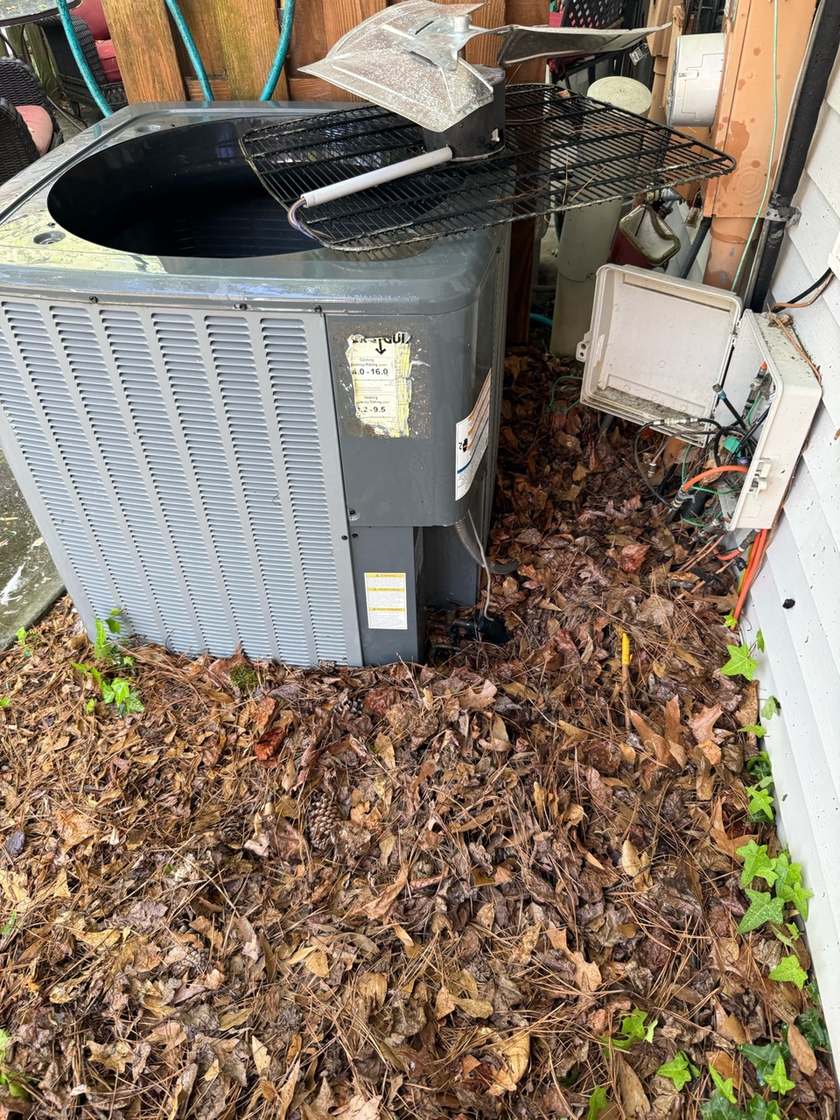
Outdoor AC condenser with its fan removed, sitting in a deep bed of dead leaves and pine needles
Leaves and debris packed around an outdoor unit restrict airflow.
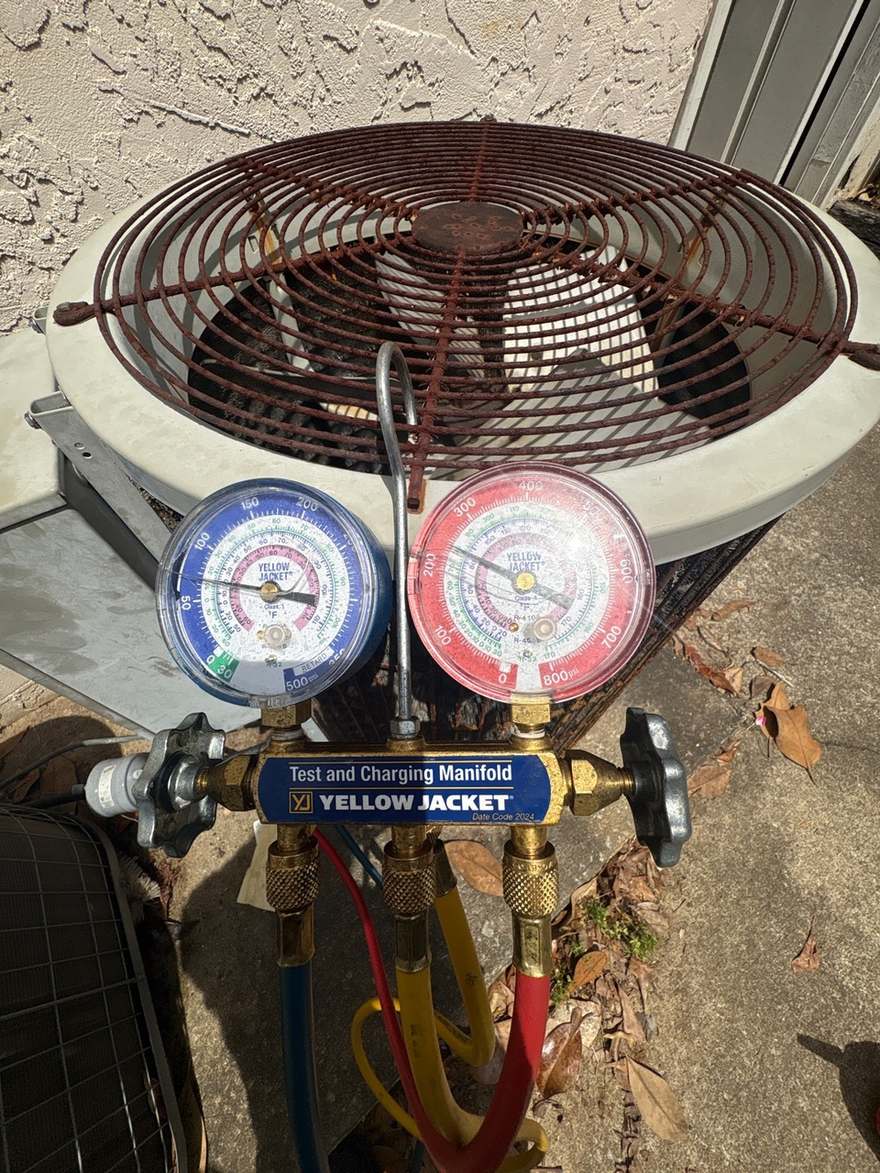
Refrigerant manifold gauges hanging on a residential outdoor AC unit during a cooling diagnostic
Gauges connected to the outdoor unit for a cooling diagnostic.
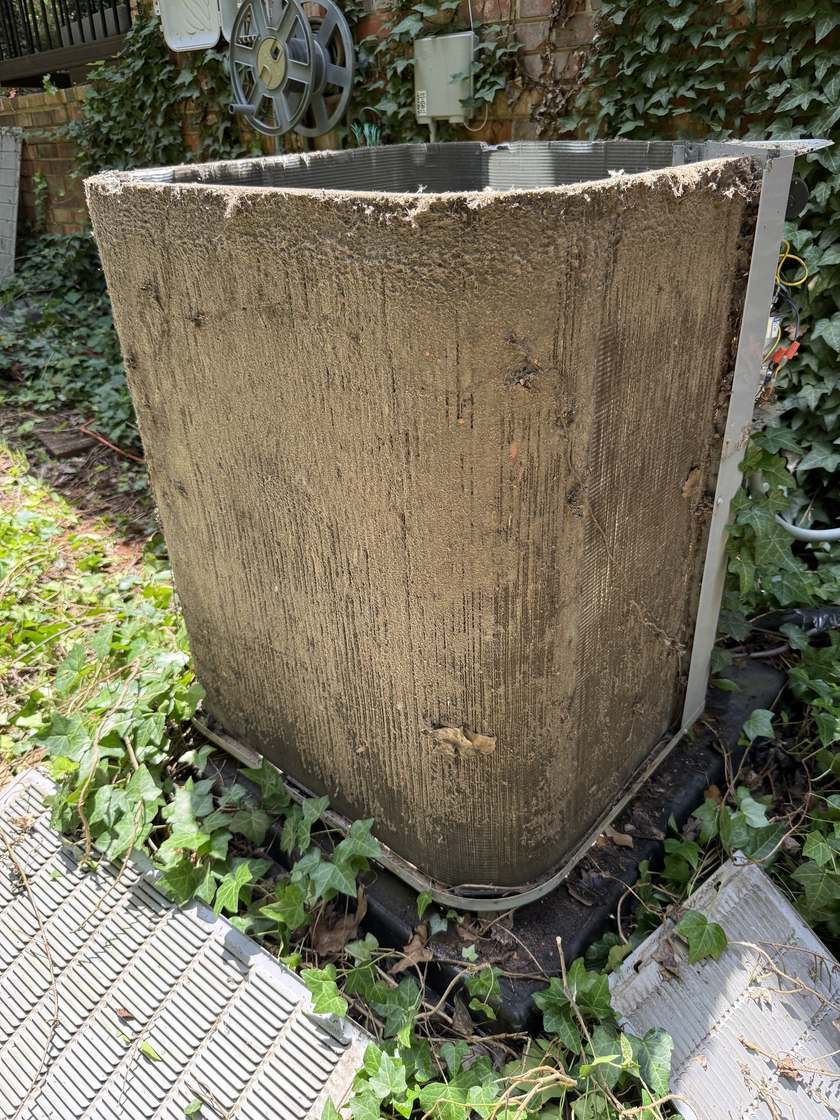
Outdoor air conditioner condenser with its panels removed, the coil fins covered in a thick matted layer of dust and debris, beside a brick wall with ivy at its base
A condenser coil caked in dirt and debris.

Why is my AC freezing up?

Finding ice on an air conditioner in a Georgia summer feels like a joke, but it's one of the most common calls we get. The coil has gotten too cold, usually because not enough air is passing over it or because the refrigerant charge is low. Turn the AC off, switch the fan to “on” to help the ice melt, and give it a few hours. If it freezes again, something underneath needs a technician.

An evaporator coil is supposed to run just above freezing. When airflow drops, from a dirty filter, a blocked return, a failing blower motor or a dirty coil, the coil temperature falls below 32 degrees and the moisture in the air turns to ice on it. Low refrigerant produces the same result by dropping the pressure inside the coil. Then the ice itself blocks more air, which makes the coil colder, which makes more ice. Running a system in that state can push liquid refrigerant back into the compressor, which is a classic way to kill one. So the right order is a full thaw first and a real diagnosis second.

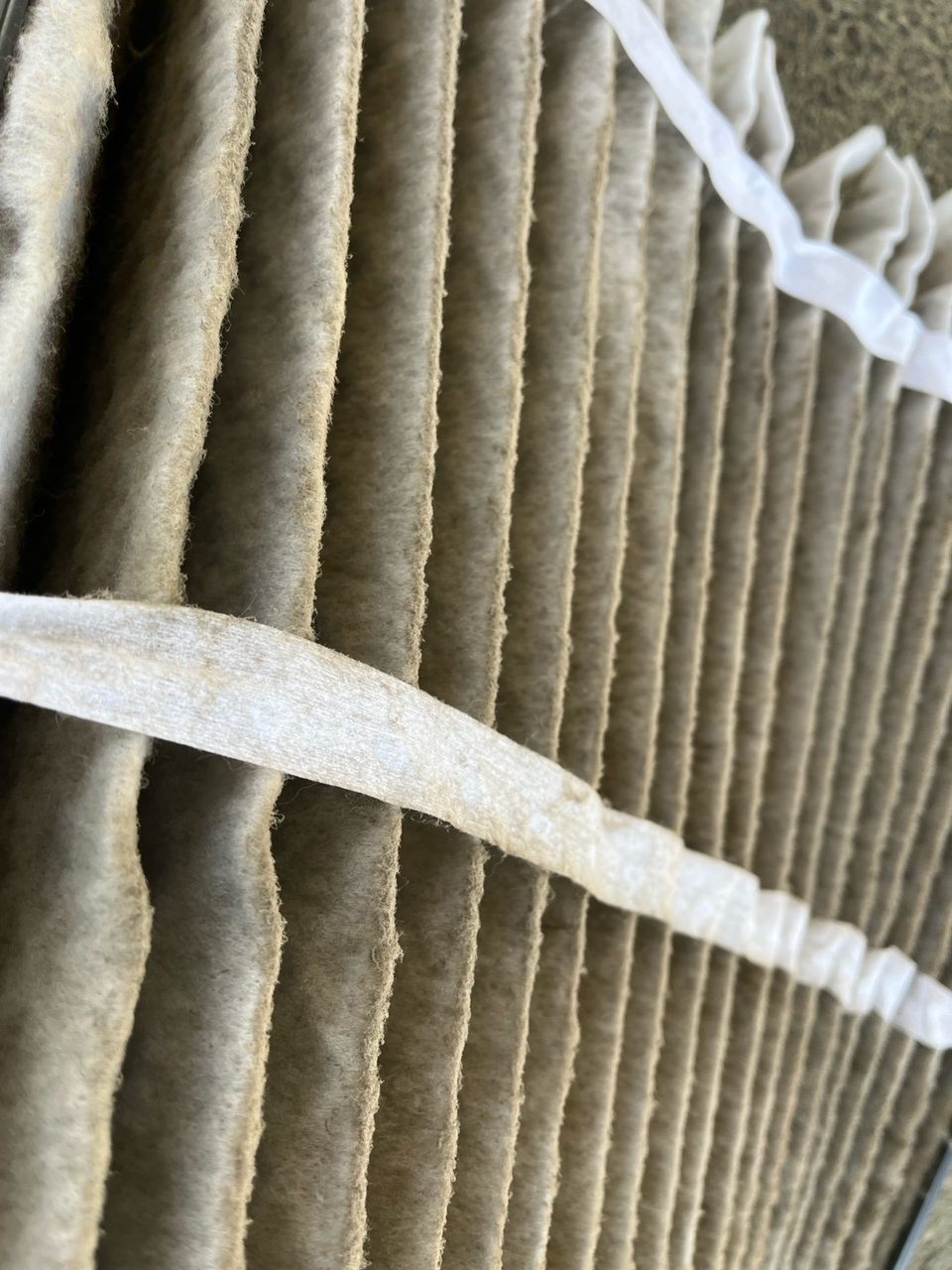
Close-up of a pleated air filter covered in a thick layer of gray dust
A filter loaded with dust like this restricts airflow.
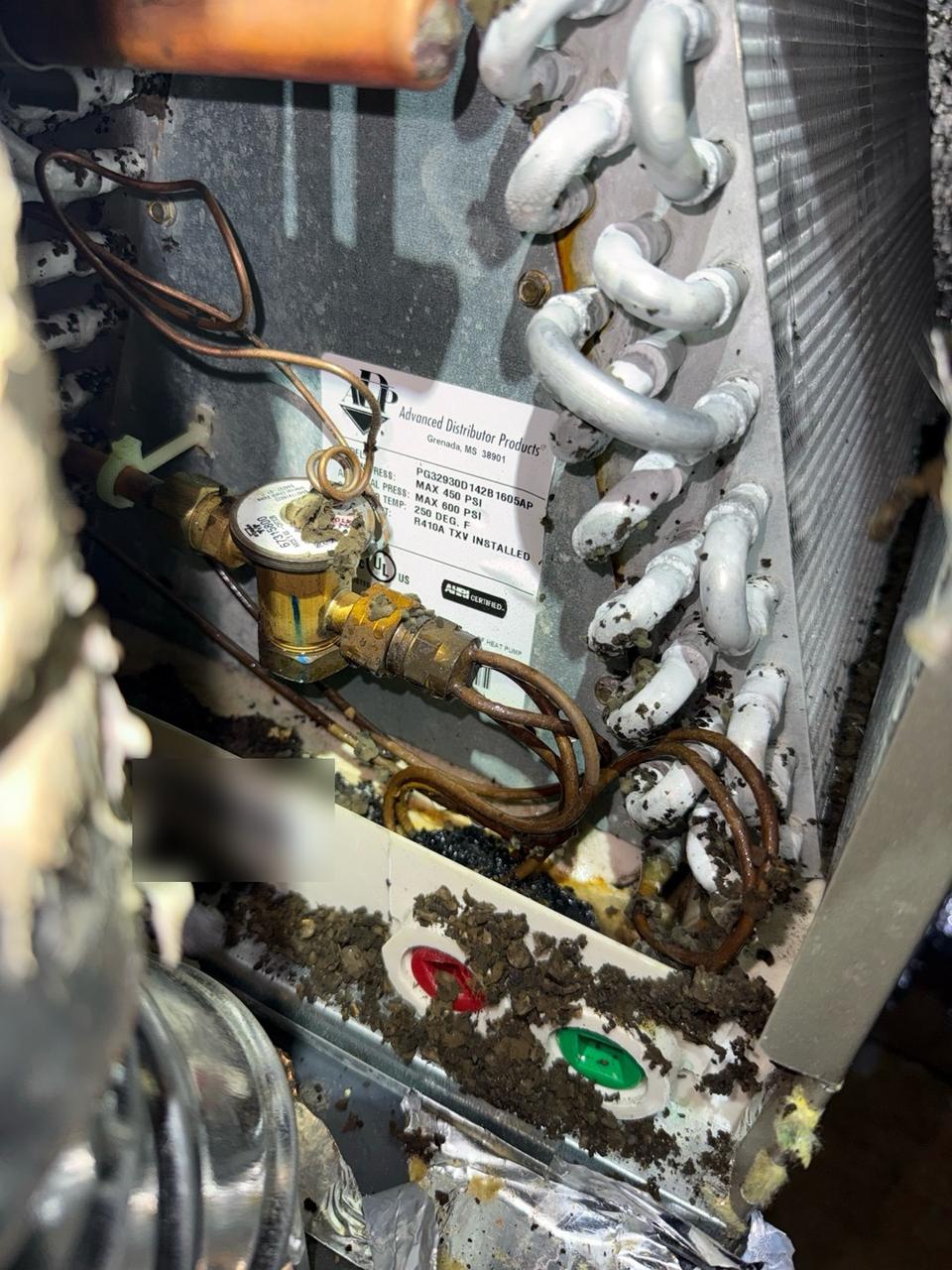
Inside an air handler: evaporator coil fins, expansion valve and drain pan coated with dark dirt and sludge
Dirt and sludge built up on an evaporator coil and drain pan.
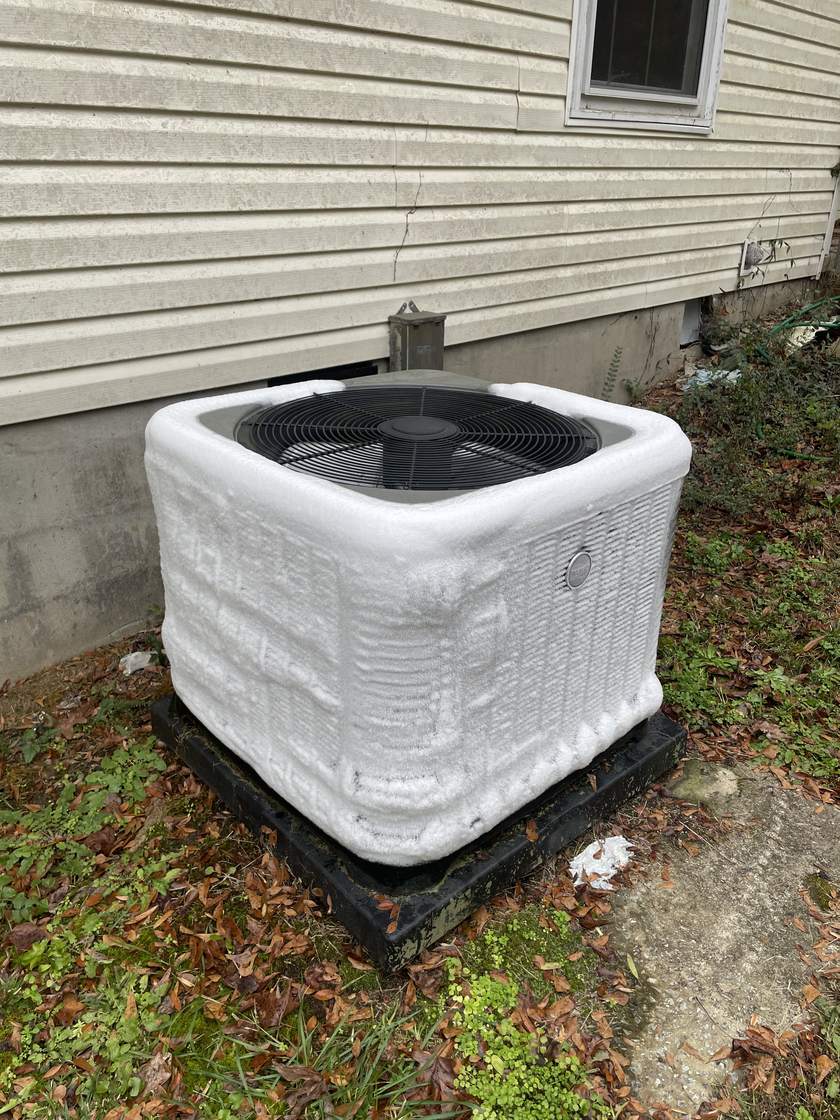
Outdoor air conditioner condenser unit beside a house, its side panels covered in a thick layer of white frost and ice, sitting on a black pad
An outdoor unit covered in thick frost and ice.

How often should I change my air filter?

Look at it every month and replace it every one to three months. If you have pets, allergies, or a lot of Georgia pollen to contend with, lean toward monthly. A clogged filter quietly drives up energy bills and shortens the life of the system, and it costs almost nothing to prevent. Members get free standard filters.

Filters are rated by MERV, a number that describes how small a particle the filter can catch. The trap is that a higher rating also restricts airflow, and many residential systems weren't designed for a very dense filter. The extra resistance raises static pressure, which strains the blower motor and can bring on the freezing problem described above. For most homes, a MERV 8 to 11 is the sensible middle. If you want better filtration without choking the system, a deeper media filter cabinet gives you more surface area to work with.

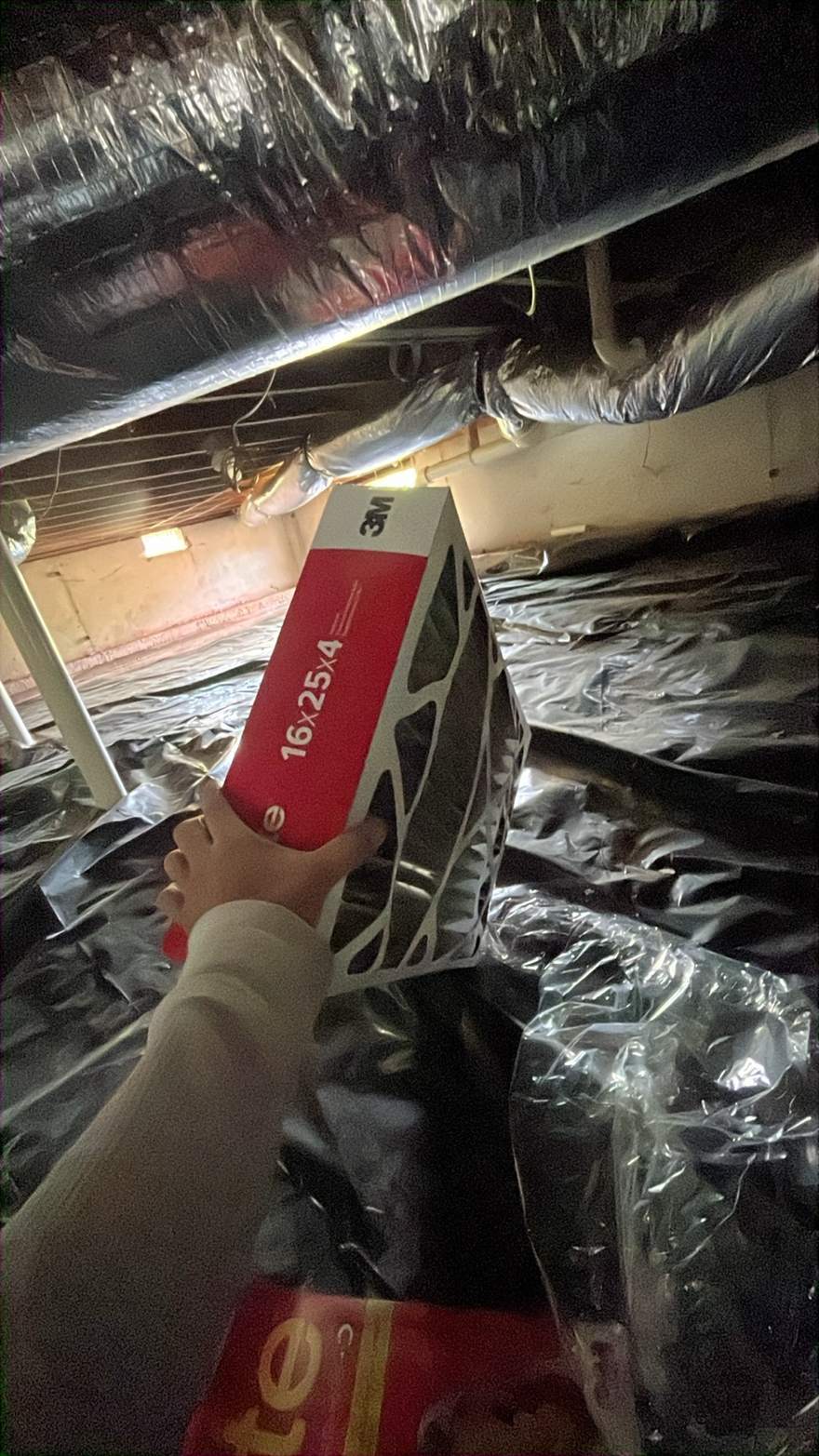
Hand holding a new 16x25x4 pleated air filter in a crawlspace next to insulated ductwork
Installing a new 4-inch filter.
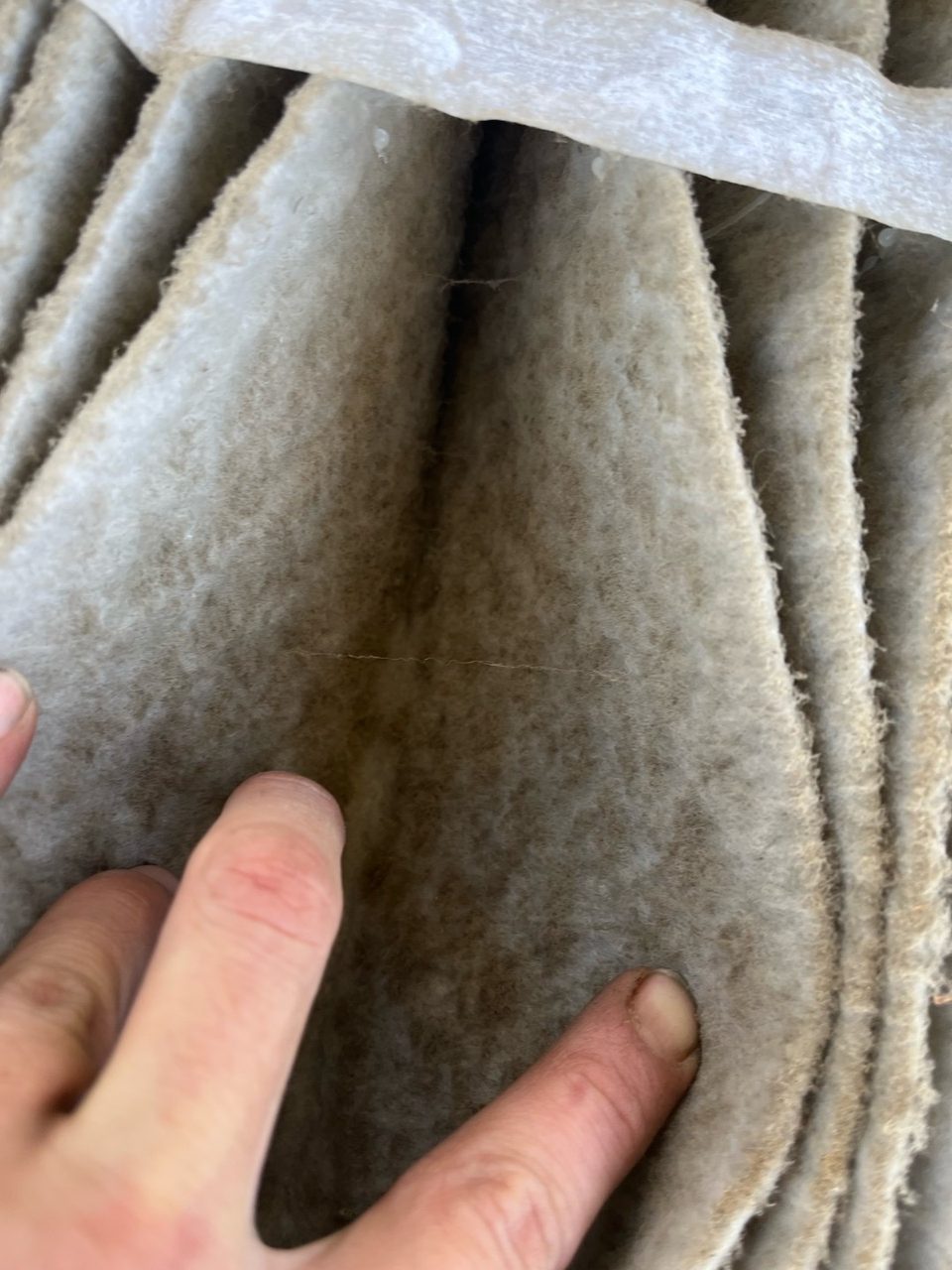
Fingers pulling apart the pleats of a dirty air filter to show dust packed deep inside
What a heavily loaded filter looks like inside the pleats.
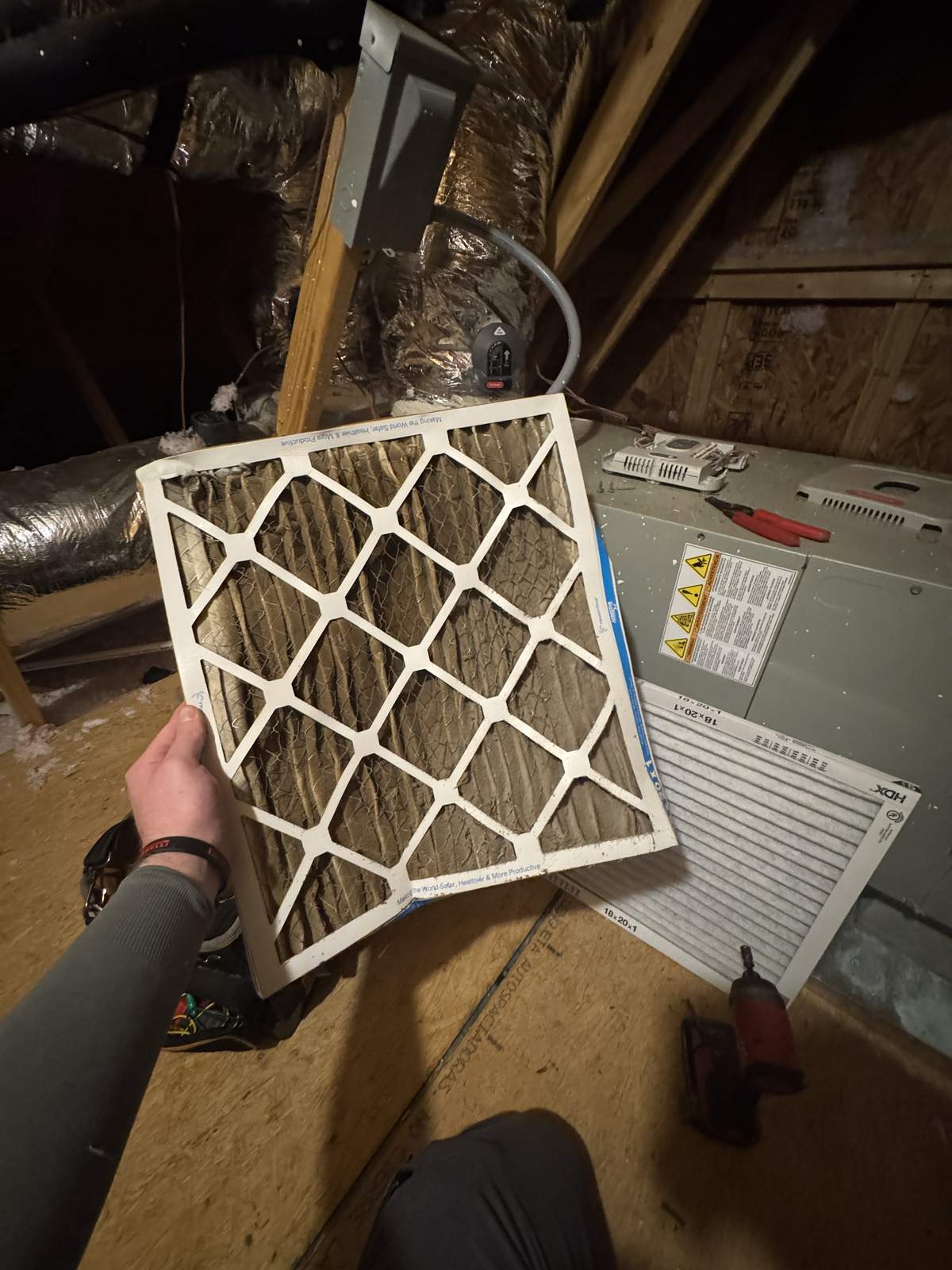
Hand holding a dirty, dust-clogged pleated air filter with a bent frame beside a clean new filter on an attic floor
A clogged dirty filter held next to a clean new one.

Should I repair or replace my system?

Mostly it comes down to age, the size of the repair bill, and how often the thing has been breaking down. A common rule is that if the system is somewhere between 10 and 15 years old and the repair is a big fraction of the cost of a new one, replacement tends to win. We'll give you the honest numbers on both and we won't steer you toward the expensive option. Ask us for a free estimate.

The deeper question is what you'd be paying to keep. Older systems usually carry much lower efficiency ratings than current equipment, so they cost more to run every month. Many of them use R-22, a refrigerant that was phased out in 2010, and the shrinking supply has made repairs on those systems expensive. R-410A is now on the same path. As of 2025, manufacturers can no longer build new residential systems that use it, and the industry has moved to newer refrigerants, so it's worth asking what a new system uses. A major failure like a compressor or a coil on an older system often costs more than the machine is worth.

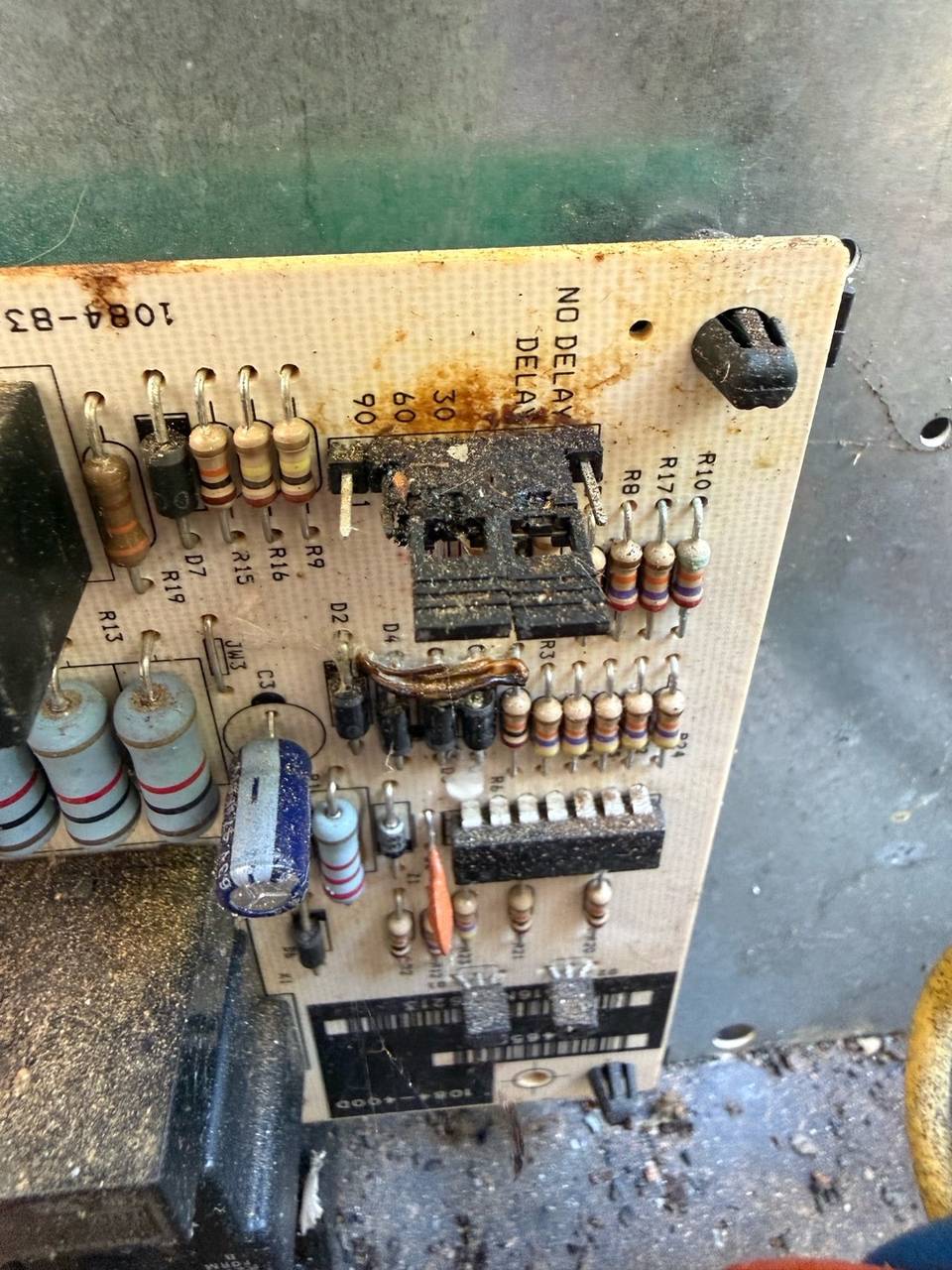
Burned and charred circuit board inside an HVAC unit, with a melted connector and heat-stained area
A control board damaged by an electrical failure.
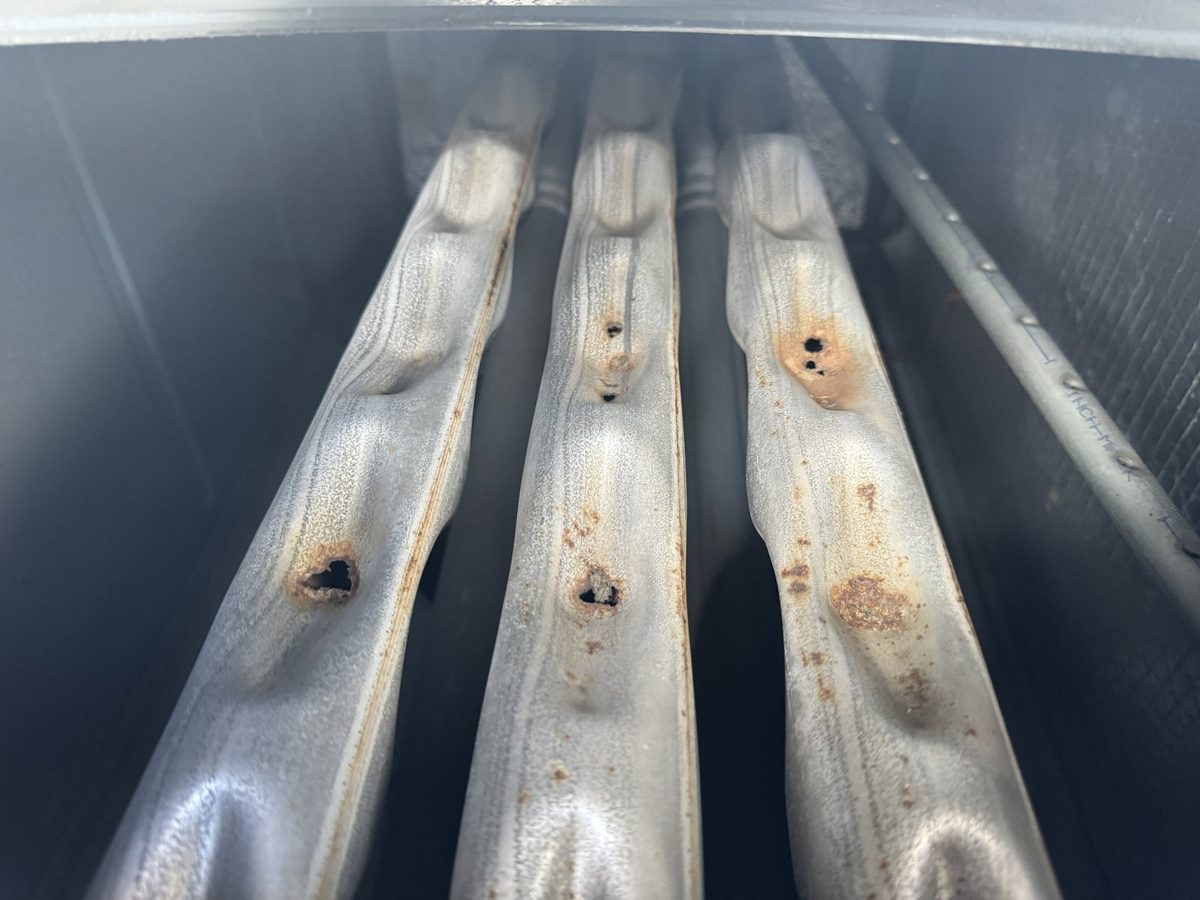
Rusted gas furnace heat exchanger cells with several holes rusted through the metal
A dangerously corroded heat exchanger
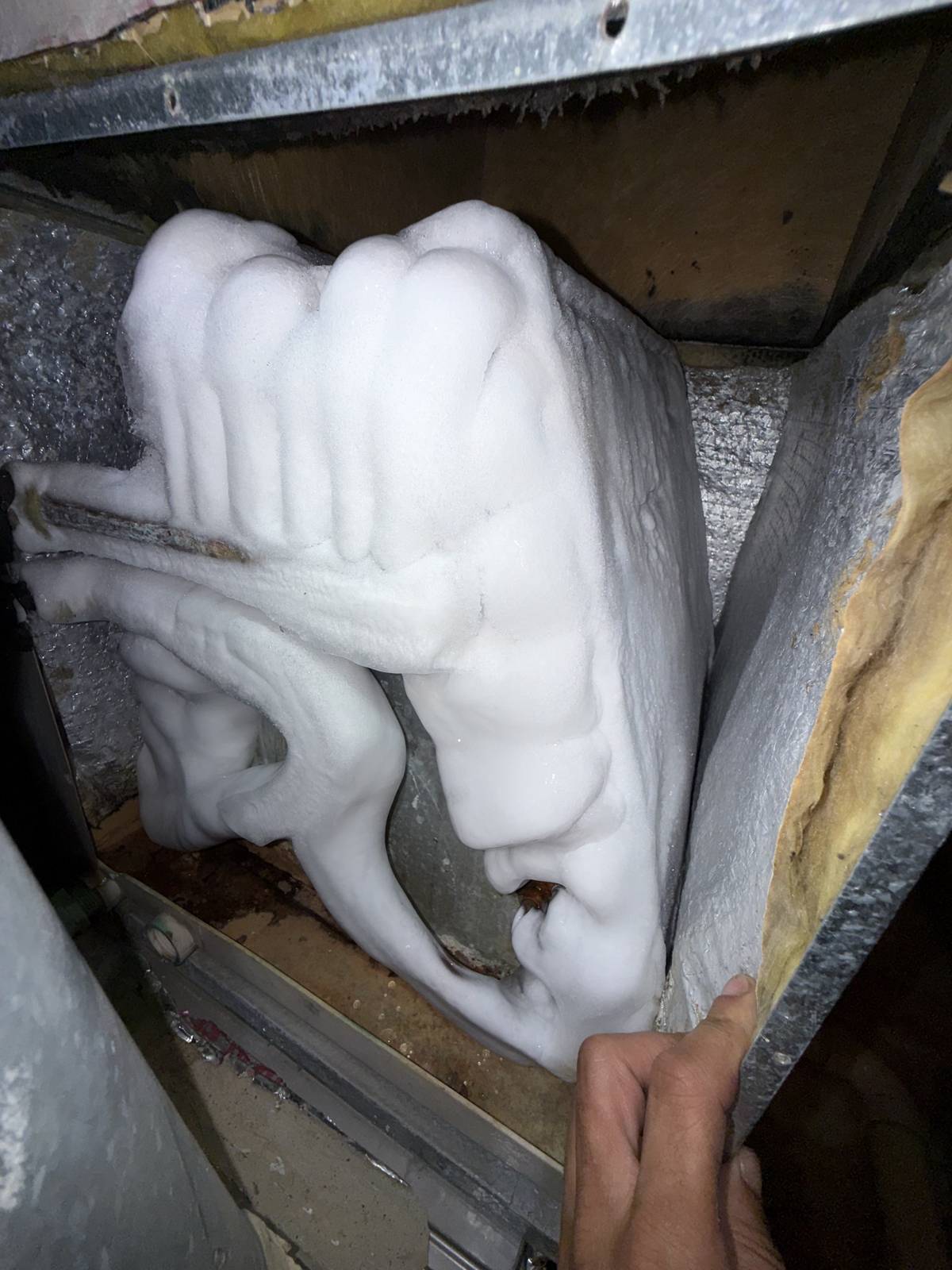
Evaporator coil and copper lines inside an air handler covered in thick ice, with a hand pulling back foil-faced insulation
A frozen evaporator coil

How much does a new HVAC system cost?

Nobody can honestly answer that without seeing your house, and the people who try are usually guessing or selling. So we come out, look at your home and your current system, and give you a clear written estimate at no charge, with no pressure to decide on the spot.

What moves the price is worth knowing. Equipment type matters, whether that's a standard single-stage system, a variable-speed one, a heat pump, or an air conditioner paired with a gas furnace. Efficiency is measured as SEER2 for cooling, and as HSPF2 for heat pump heating or AFUE for furnaces. The condition of your ductwork, the size and heat load of your home, local permit and code requirements, and how complicated the installation is all push the number around. A more efficient system costs more up front and can cost less every month after, and a free estimate lets you compare good, better and best side by side.

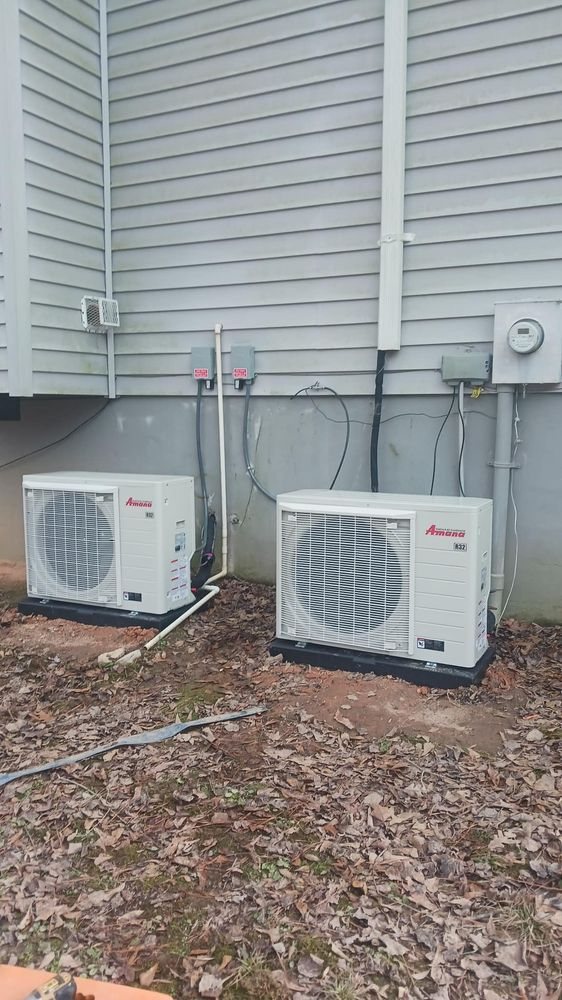
Two new Amana outdoor air conditioner units installed side by side beside a home
Two new outdoor units installed side by side.

Why is my furnace or heat pump not heating?

Check the dull things first, because the dull things are usually the answer. Make sure the thermostat is set to heat and above the current room temperature, that the breaker hasn't tripped, and that the filter is clean. Heat pumps also run a short defrost cycle in cold weather, which is normal. If you get no heat, cold air, or strange smells, call us. And if you ever smell gas, leave the house immediately and call your gas company or 911 before you do anything else.

In a gas furnace, the common causes of no heat are a dirty flame sensor, a failed igniter, a clogged condensate line on a high-efficiency model, or a safety switch such as the pressure switch or limit switch shutting things down. A cracked heat exchanger is the one that matters most, because it can let combustion gases, including carbon monoxide, into the house. That's the real reason annual inspections exist, and why we recommend carbon monoxide detectors on every floor. In a heat pump, a failed reversing valve, low refrigerant or a faulty defrost control can leave you cold. Heat pumps also lean on auxiliary electric heat strips on very cold days, and if those strips aren't kicking in, the house will feel it.

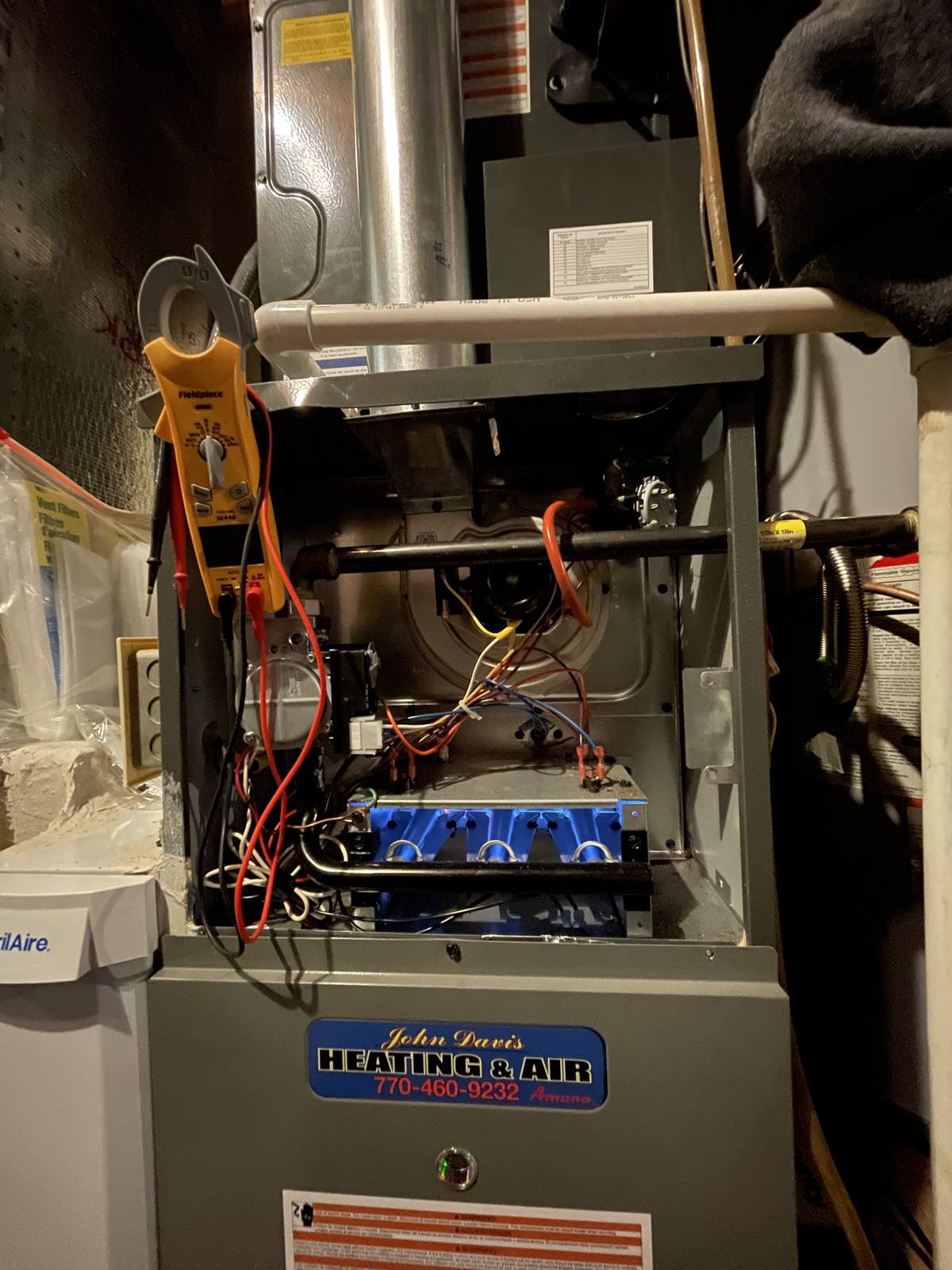
Gas furnace with the upper front panel removed and four blue burner flames lit, with a yellow multimeter hanging from the cabinet and a service-company sticker on the lower panel
A gas furnace with the panel off and the burners lit.
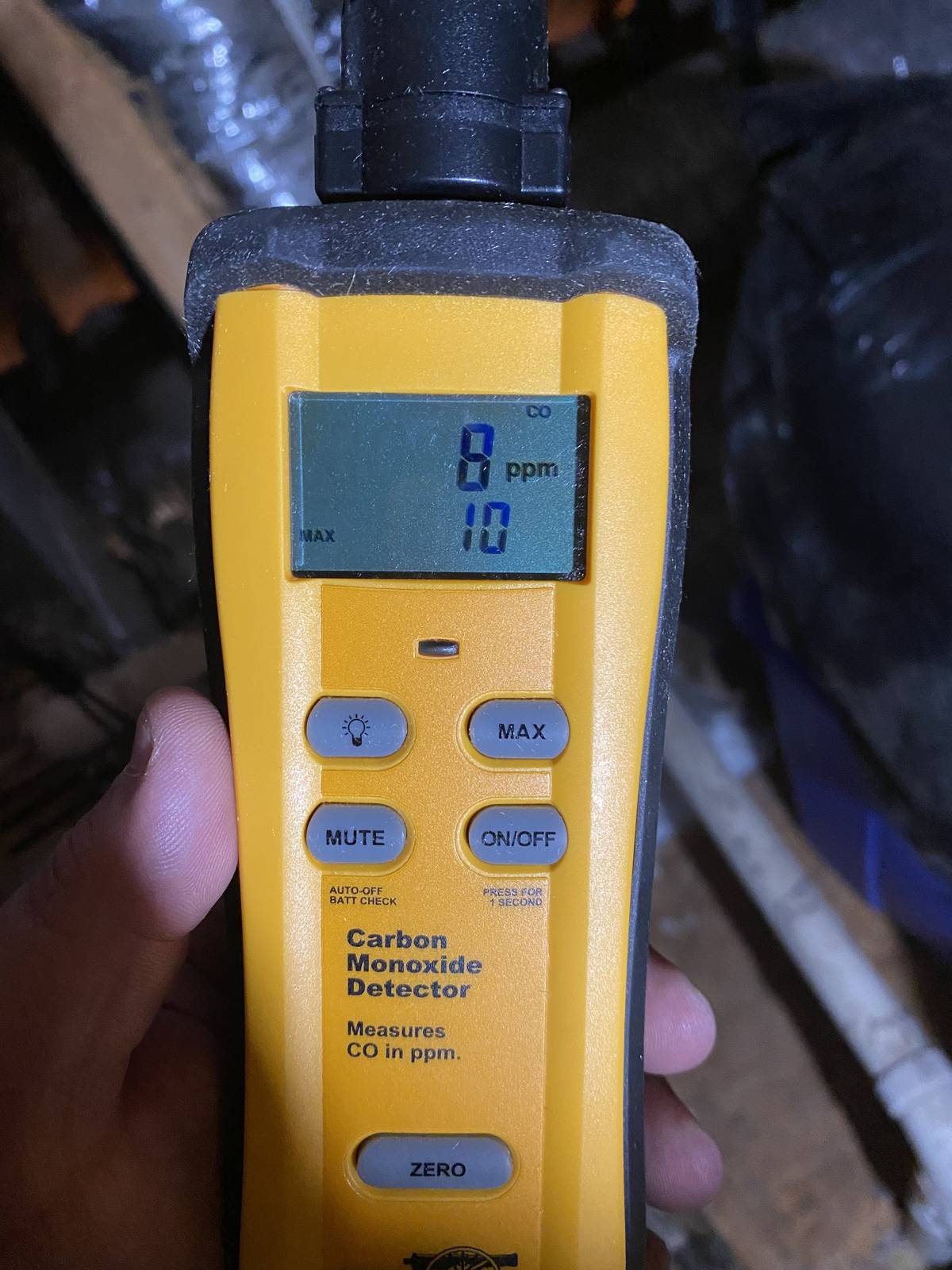
Hand holding a yellow handheld carbon monoxide detector whose display reads 8 ppm, with a maximum of 10, in a dim attic or crawl space
A handheld carbon monoxide detector showing 8 ppm.
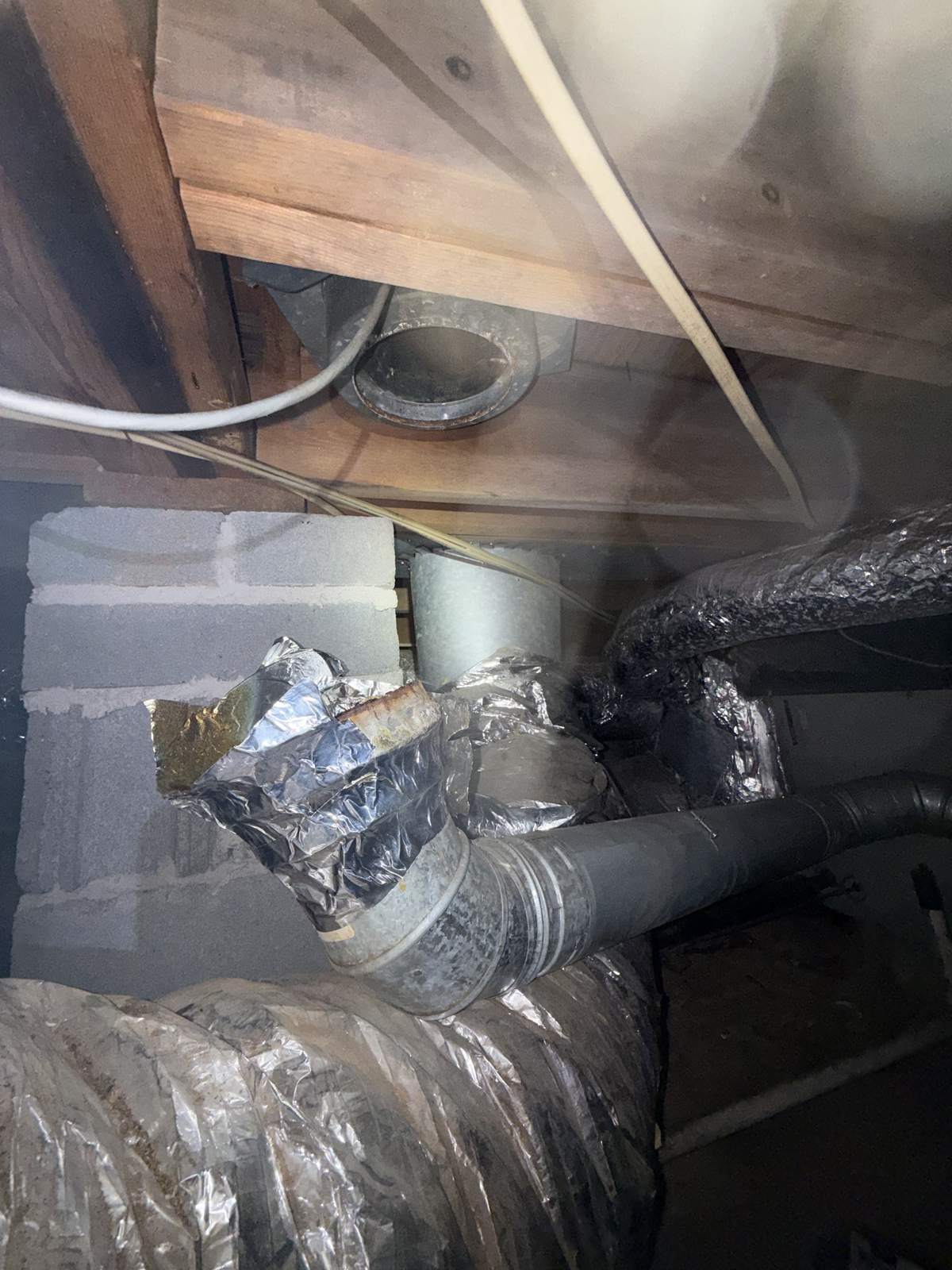
Metal pipe elbow wrapped in crumpled silver foil tape below an open round vent collar between floor joists in a crawl space
A pipe elbow with crumpled foil tape below an open vent collar.

What is a maintenance membership, and is it worth it?

It's our plan for keeping your system healthy year-round, and the offer is simple. You get two tune-ups a year, 10% off repairs, free standard filters, and priority scheduling, so members get seen first when the weather turns. Members also pay no service fee, $0 instead of the regular $90. Pricing for the plan is on our membership page, but plans start at just $15 per month.

The real value is in what doesn't happen. A system from twenty years ago was a fairly simple machine, with a single-speed motor, a mechanical relay or two, and not much else to go wrong. Today's equipment is a different animal. It has variable-speed motors, electronic control boards, sensors, communicating thermostats and tighter tolerances throughout, and every one of those parts is more expensive to replace and less forgiving of dirt, heat and neglect. That's exactly why regular maintenance matters more now than it ever did. A tune-up keeps coils clean, electrical components tested and the refrigerant charge correct, which helps the system run efficiently and last longer, and it catches the weak capacitor or loose connection before it takes out a control board that costs many times more. With new systems costing what they do, protecting the investment is simply good sense. Many manufacturer warranties also expect routine maintenance, and a neglected system can have a warranty claim denied. Priority scheduling matters more than people expect, because demand for HVAC repair spikes in the first heat wave and the first cold snap, and members skip the long wait. Add the waived service fee, the repair discount and the free filters, and the plan tends to pay for itself.

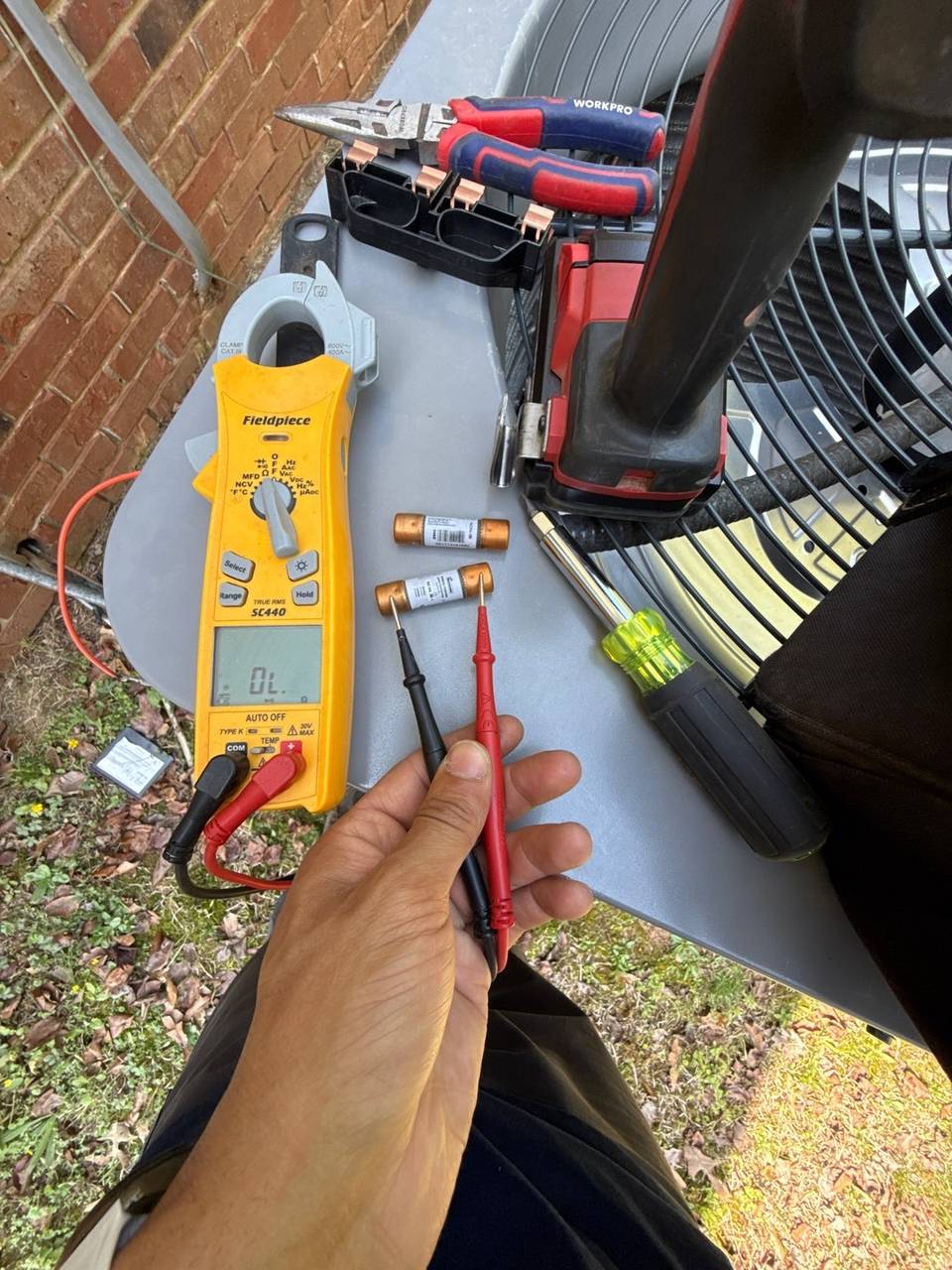
Multimeter and probes testing two small cartridge fuses laid on top of an outdoor AC unit, with hand tools beside them
Testing fuses with a multimeter during a repair.
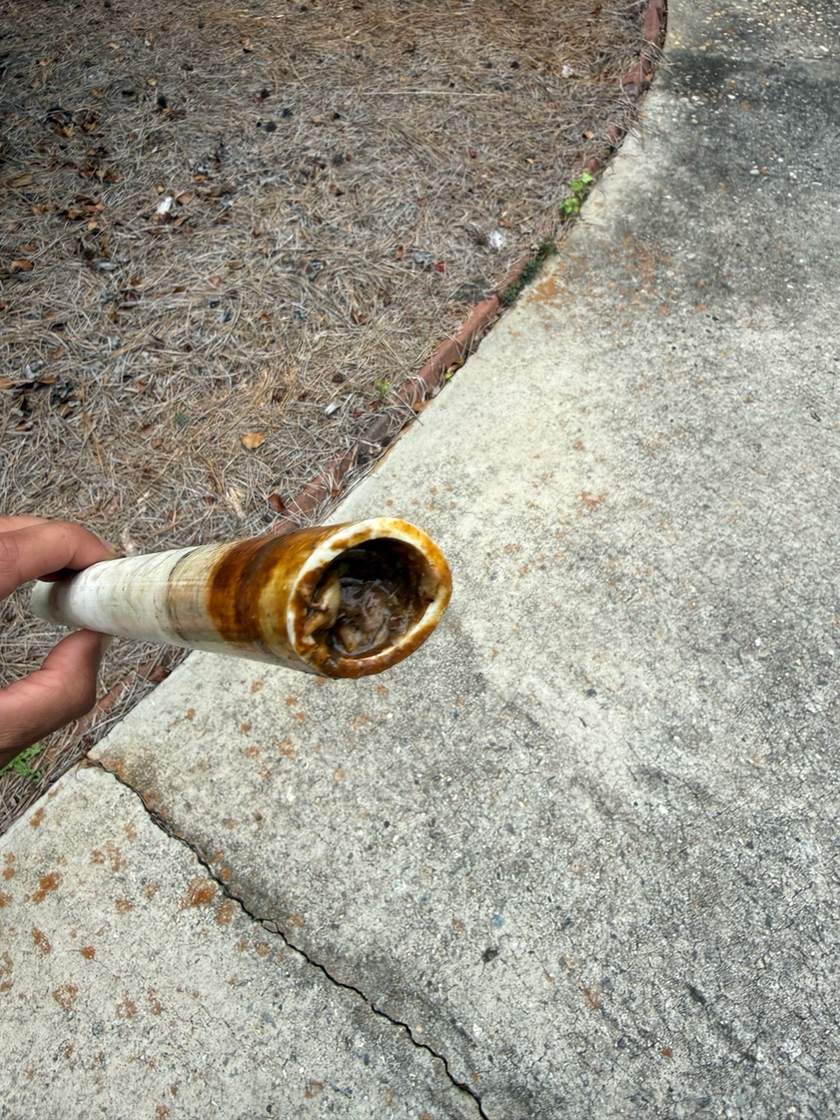
Hand holding a white PVC condensate drain pipe whose open end is blocked with thick brown sludge
A condensate drain line clogged with sludge.
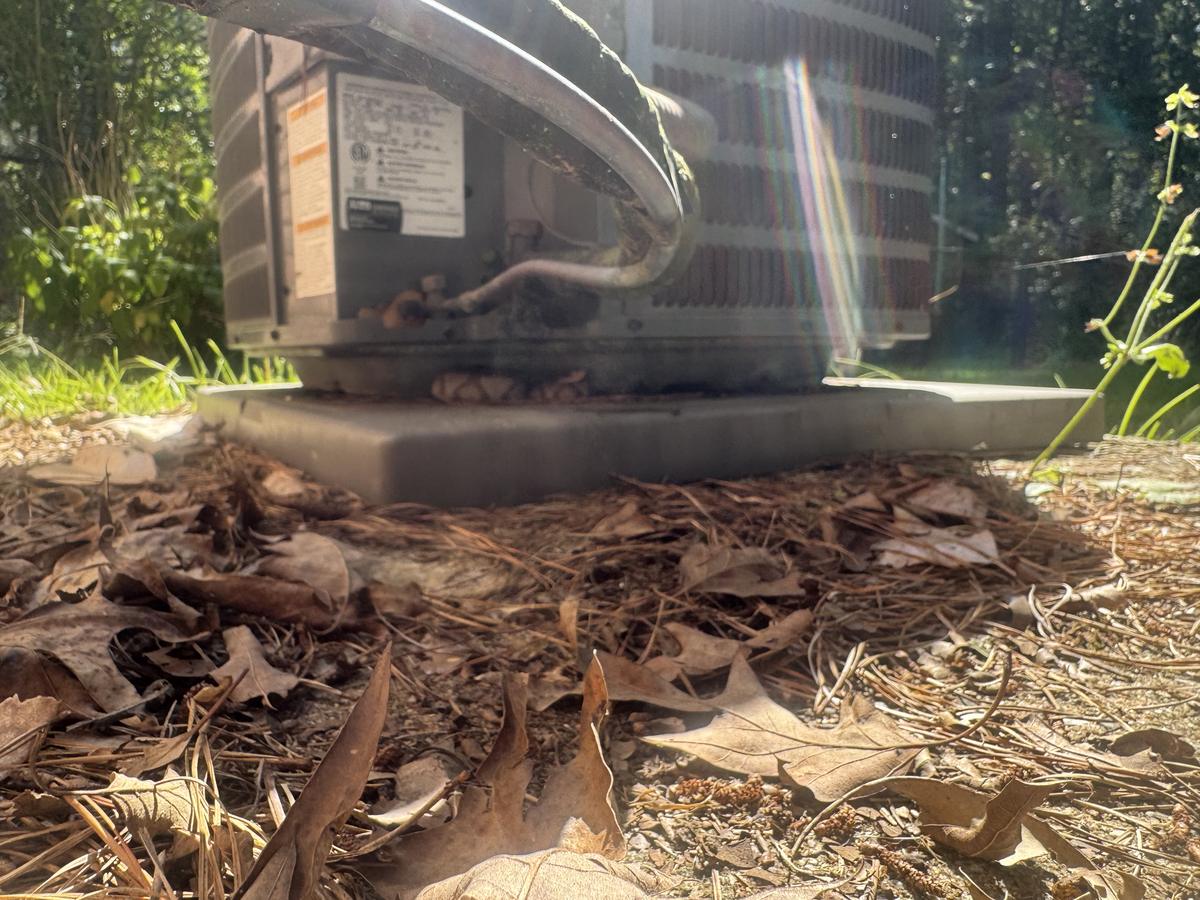
Copperhead snake coiled in the shadowed gap beneath an outdoor air conditioner condenser unit, with dry leaves and pine needles on the ground in front
Watch out! A copperhead hiding under the condenser unit

Why is my energy bill so high?

Heating and cooling are usually the biggest part of a home's energy use, so a high bill often points at the system or at the house itself. In Georgia, at least 50% and as much as 70% of your energy bill comes from your HVAC system. The common culprits are a dirty filter, an aging system, leaky ducts, poor insulation, or equipment that hasn't been tuned up in years. We can look at your system and tell you straight where the money is going.

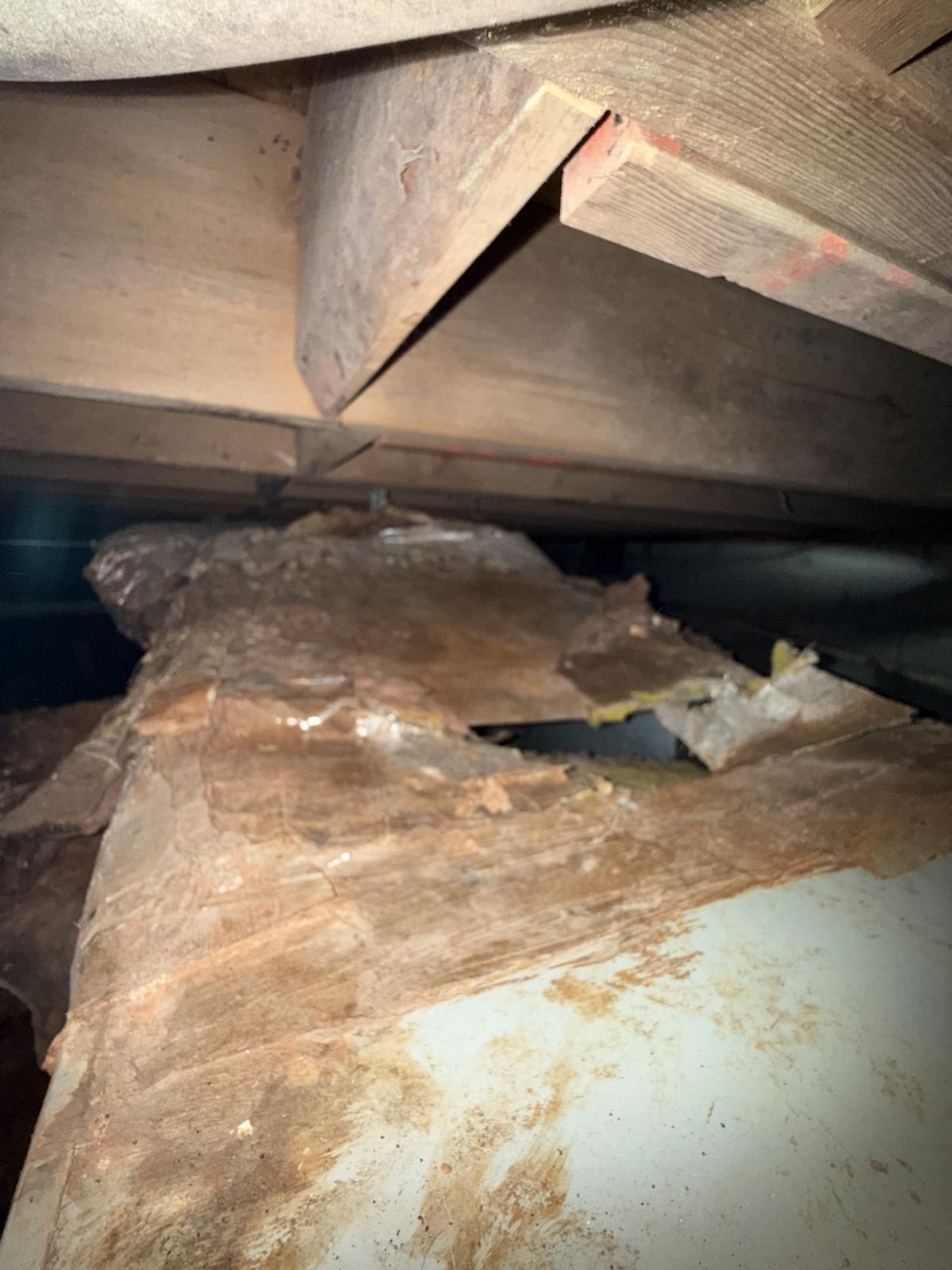
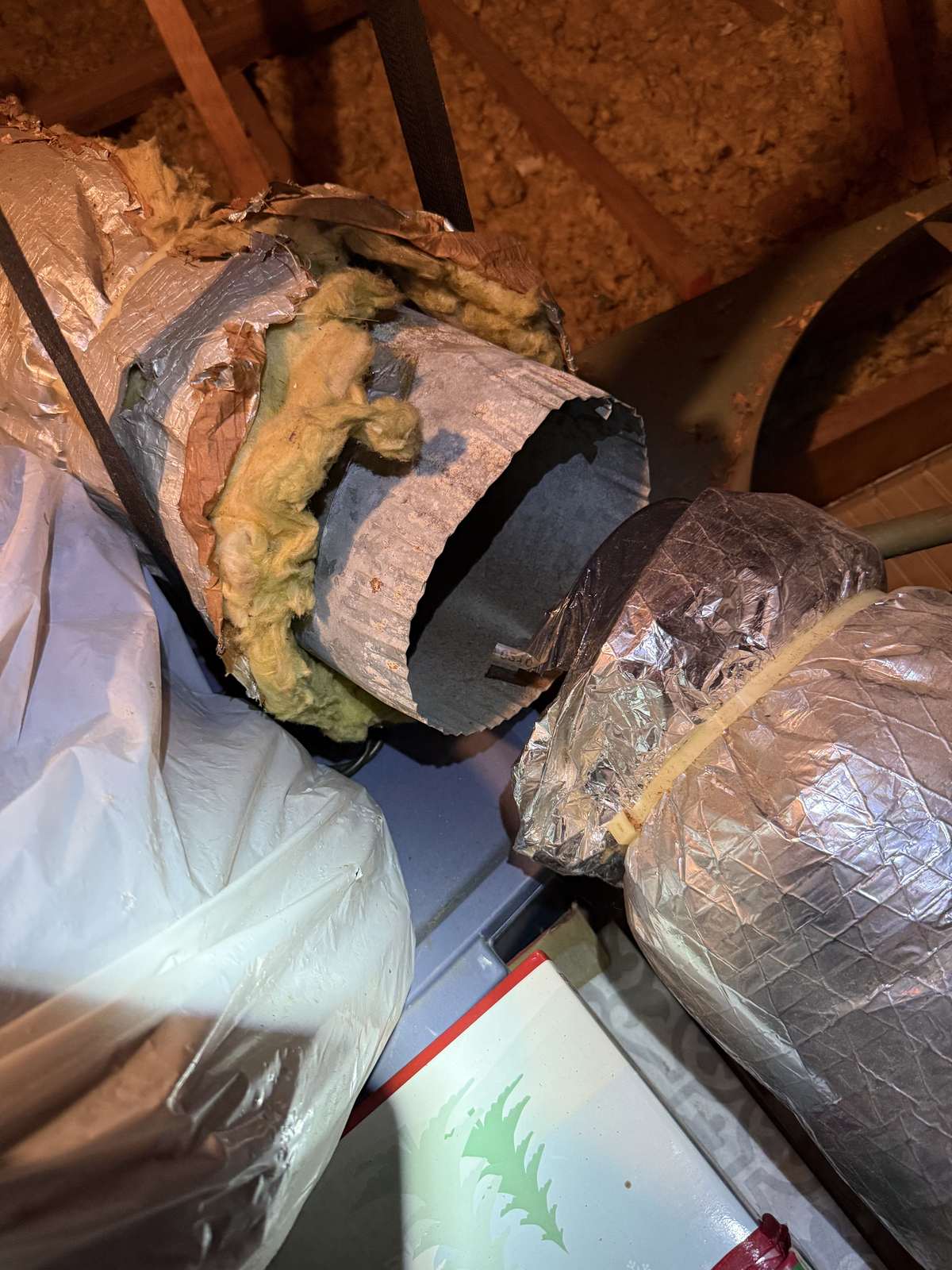
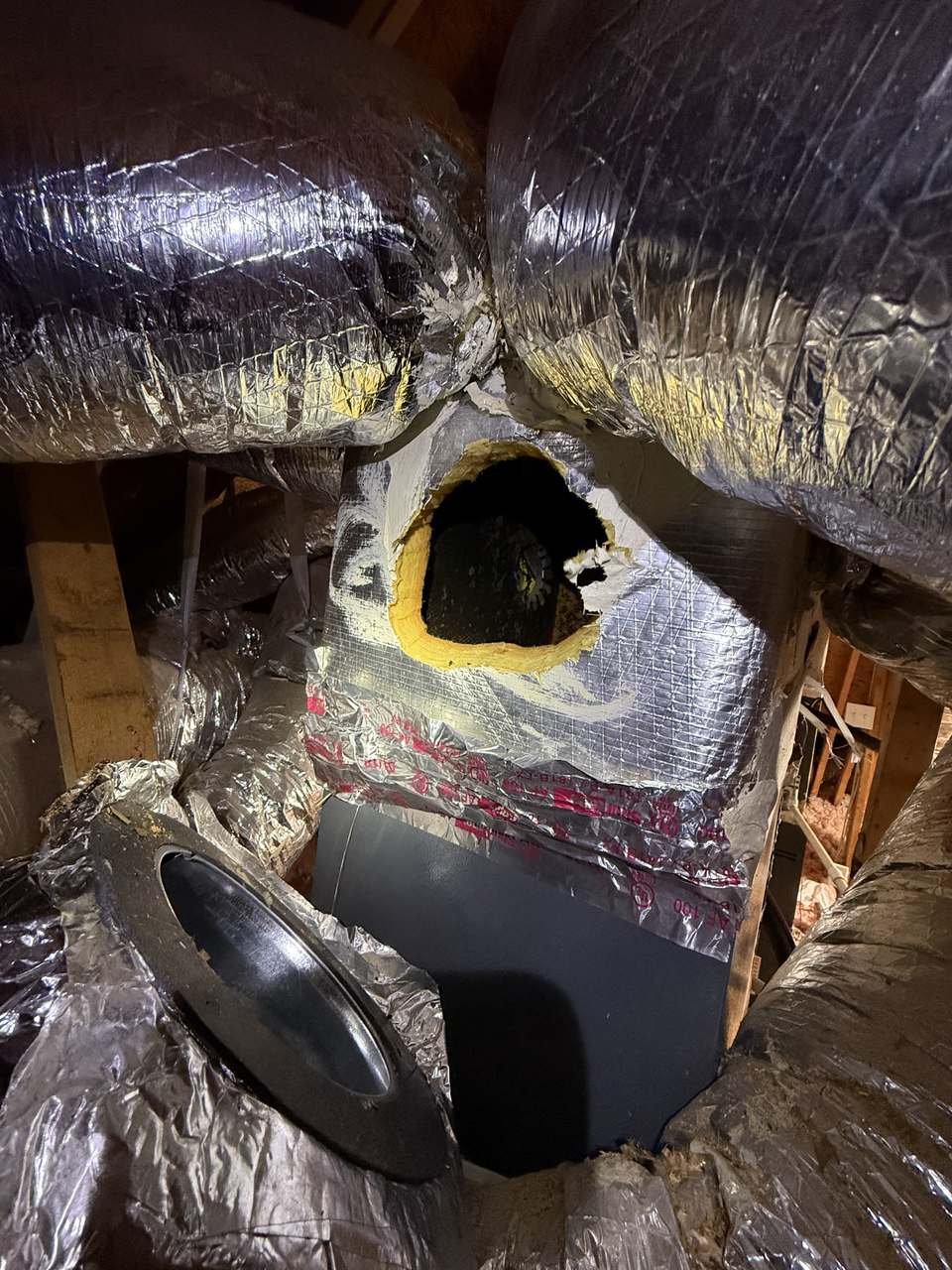
The ducts deserve a closer look than they usually get. ENERGY STAR estimates that typical duct systems lose 20 - 30% of the air moving through them to leaks and poor connections, especially ducts running through a hot attic or a crawl space. A system with weak airflow or a low refrigerant charge runs longer to reach the thermostat setting, and older equipment simply uses more power for the same cooling. Oversized systems short-cycle, meaning they shut off before they finish the job, which wastes energy and leaves humidity behind, a real problem in a Georgia summer. A duct leakage test and a system performance check can pinpoint which of these is costing you the most.

Torn, stained duct wrap with a large ragged hole in a dark crawl space beneath wooden floor joists
A torn and stained duct with a large hole.
Flexible attic duct with torn foil and insulation, pulled apart from the next section with a gap between the two ends
A flexible duct pulled apart in an attic.
Flexible foil-wrapped duct disconnected from its collar in an attic, leaving a large opening that dumps conditioned air into the attic space
A flex duct that came disconnected, dumping air into the attic

What should I do if my system breaks down at night or on a weekend?

Call 770-460-9232, any hour of any day. We answer the phone and schedule around the clock, so you won't reach a dead end, and we'll get you on the schedule for the first available visit. You can also book an appointment directly on our website whenever it suits you, without waiting on a callback. While you wait for your visit, check that the thermostat is set correctly, the filter is clean and the breaker hasn't tripped, since that can save time. If it's dangerously hot or cold and you have young children, elderly family members or anyone with a health condition at home, tell us when you call so we can prioritize.

A few quick safety steps help in the meantime. If the unit is making grinding or burning sounds, shut it off at the thermostat and the breaker. If the AC is iced over, turn it off and let it thaw. If you smell gas or suspect a carbon monoxide problem, leave the home and call 911 or your gas utility right away. Members get priority scheduling.

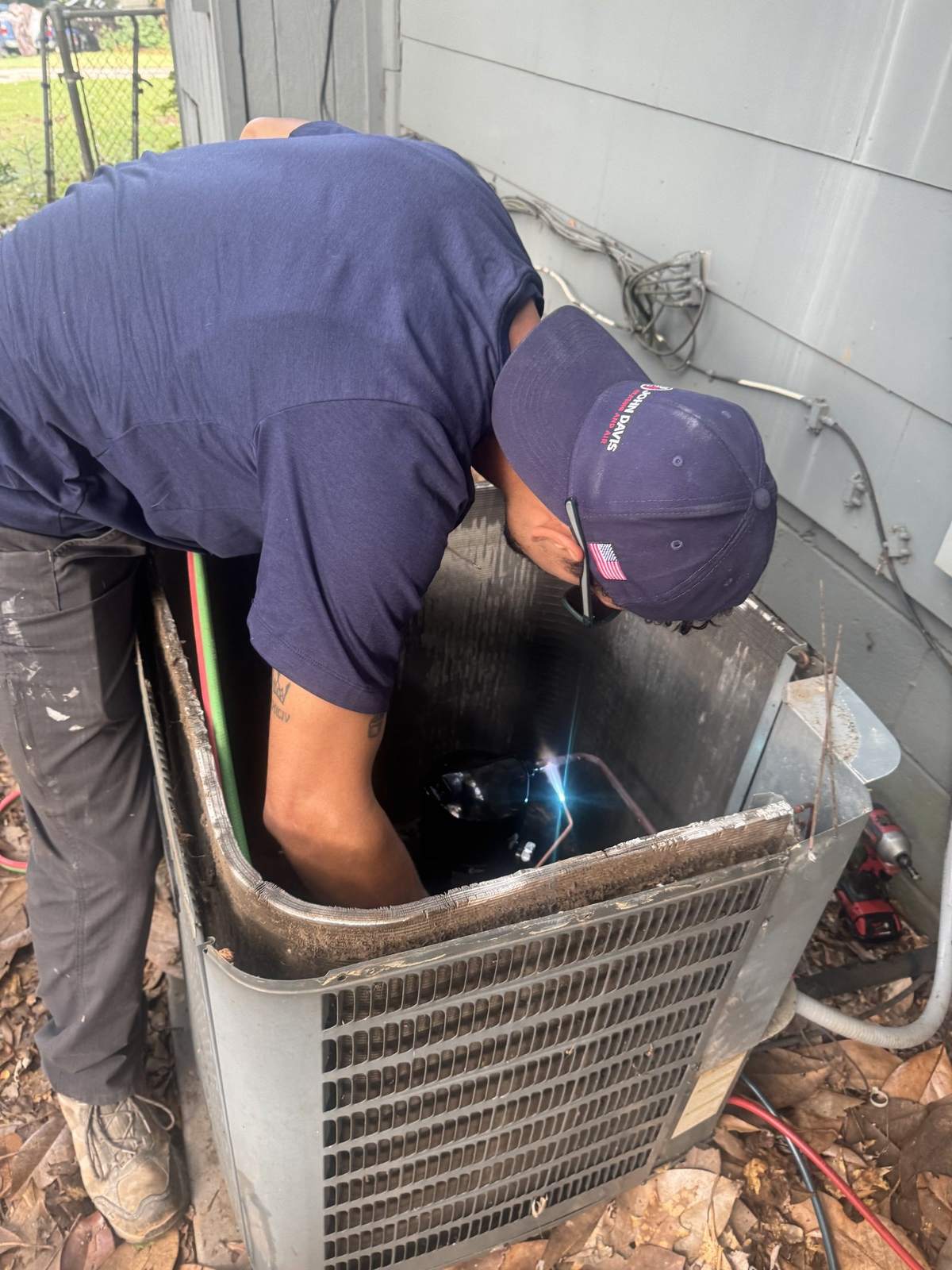
Technician in a navy cap and short-sleeved shirt leaning down into an open outdoor air conditioner beside a gray-sided house, with a cordless drill and dry leaves on the ground
A technician servicing an outdoor unit.

Need Help With Your System?